President Reveals He Considered Naming Gulf of America After Himself
Washington D.C., Wednesday, 21 January 2026.
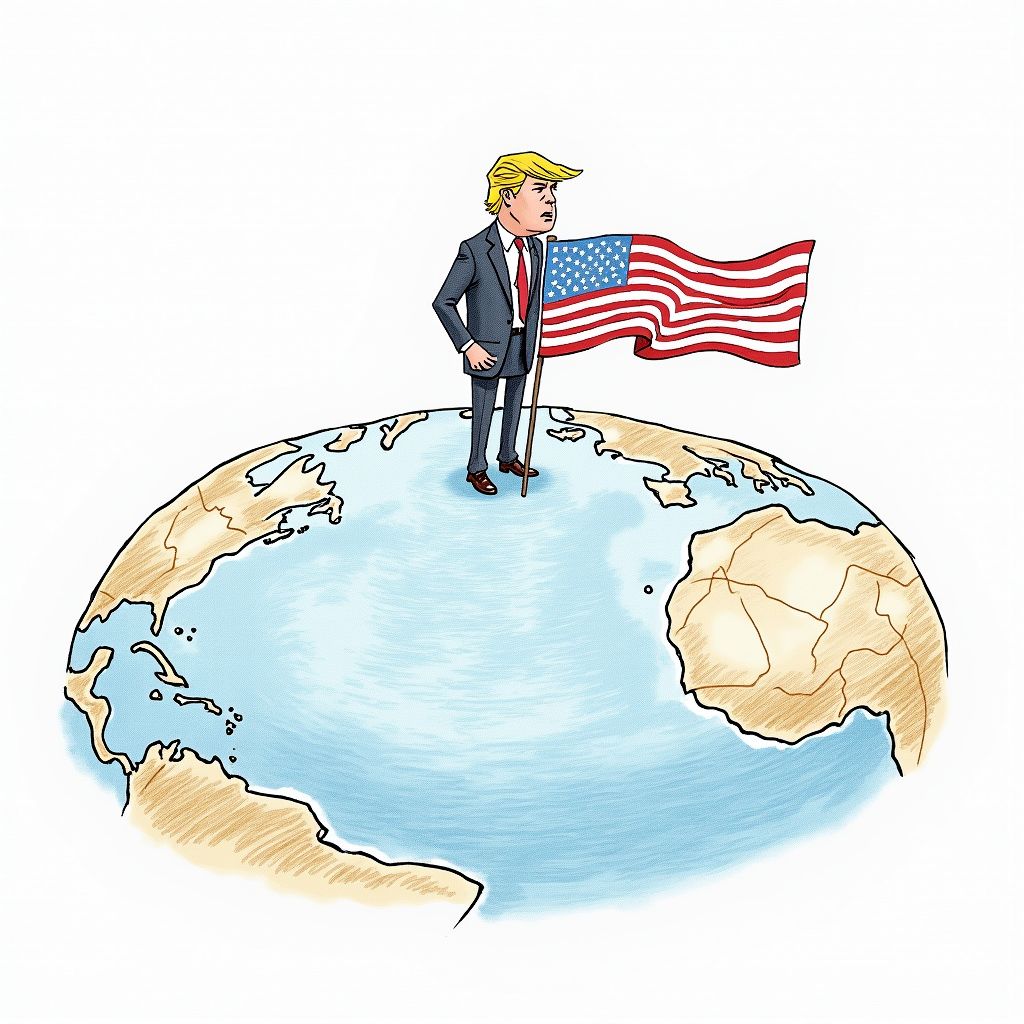
President Trump has disclosed that the newly designated “Gulf of America” was nearly christened the “Gulf of Trump.” In a candid White House briefing marking his second term’s progress, the President admitted he bypassed the self-referential title only after advisors warned of severe backlash. While he framed the comment as a jest, the admission underscores the administration’s aggressive pursuit of nationalist geographic rebranding, predicated on the argument that the United States controls the vast majority of the region’s shoreline.
Presidential Branding and National Security Concerns
During a press conference held on Tuesday, January 20, 2026, President Donald Trump reflected on his administration’s first year of his second term, specifically addressing the renaming of the Gulf of Mexico [5]. While discussing the executive order signed in January 2025 that officially designated the body of water as the “Gulf of America,” the President revealed he had initially harbored a different preference [1]. Trump stated that he intended to christen the waters the “Gulf of Trump,” telling reporters, “I was going to call it the Gulf of Trump, but I thought I would be killed if I did that” [1][4]. He further elaborated that while he personally favored the title, his advisors intervened, cautioning him that such a move would not “look too good” [3][4]. Although Trump characterized the remark as a joke, he also noted that the name had a “good ring to it” and suggested, “Maybe we could do that. It’s not too late” [3][6].
The Shoreline Sovereignty Argument
The administration’s justification for the geographic rebranding rests on a specific nationalist argument regarding territorial dominance. President Trump has repeatedly claimed that the United States controls the vast majority of the gulf’s coast. According to the President’s figures, the U.S. possesses 92% of the shoreline, compared to Mexico’s 8% [3][4]. This disparity was the primary driver for the initial executive order, with Trump stating, “It always bothered me… Why is it the Gulf of Mexico? It should be the Gulf of America” [4]. This policy was enacted swiftly during his first year back in office, with a proclamation declaring February 9 as “Gulf of America Day” signed aboard Air Force One in early 2025 [1].
Digital Adoption and Diplomatic Fallout
The name change has moved beyond rhetoric into digital infrastructure, with major technology platforms aligning with the federal directive. Both Google Maps and Apple Maps have reportedly updated their applications to display the “Gulf of America” for users within the United States [1]. However, the move has generated significant diplomatic friction with the United States’ southern neighbor. Mexico’s President, Claudia Sheinbaum, has firmly rejected the nomenclature, asserting, “For us it is still the Gulf of Mexico, and for the entire world it is still the Gulf of Mexico” [1]. This geopolitical tension underscores the broader impact of the administration’s “America First” approach to international geography.
Summary of Analysis
The President’s comments on Tuesday highlight a consistent strategy of using executive power to reshape national symbols and geographic identifiers. While the “Gulf of Trump” suggestion was framed as humor, the successful implementation of the “Gulf of America” change demonstrates the administration’s ability to enforce nationalist branding despite international objection. As the President prepares for the World Economic Forum in Davos [7], these moves signal a continued focus on asserting American dominance in both policy and nomenclature.
Sources
- www.al.com
- www.youtube.com
- www.thedailybeast.com
- ca.investing.com
- www.ctvnews.ca
- www.youtube.com
- www.dailymail.co.uk