Italy Bans Kanye West's July Concert Amid Rising Global Tour Risks
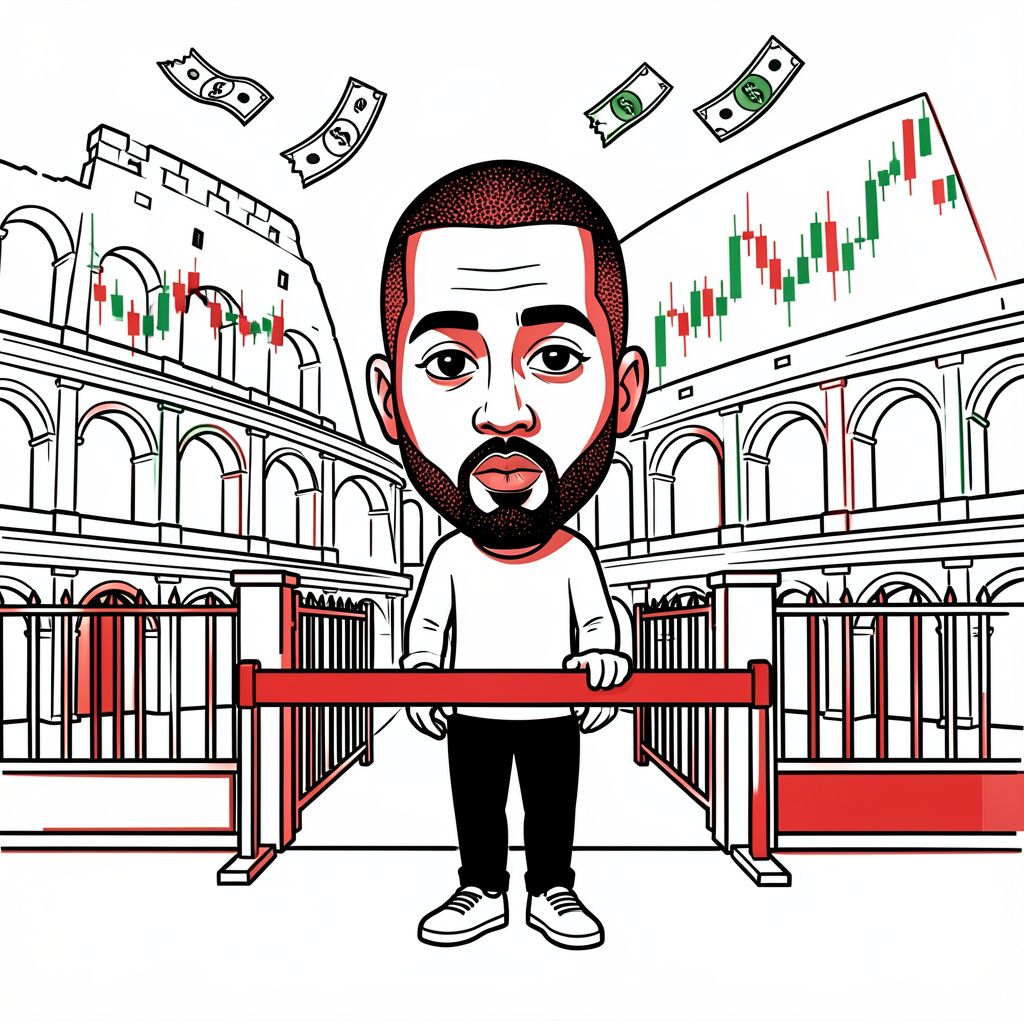
Reggio Emilia, Sunday, 31 May 2026.
Italy’s cancellation of Kanye West’s 103,000-capacity July 2026 concert underscores mounting financial risks for promoters, driven by severe safety concerns and the artist’s escalating global travel bans.
The Economics of High-Risk Entertainment
On Friday, May 29, 2026, Prefect Salvatore Angieri officially barred both West and fellow American rapper Travis Scott from performing at the RCF Arena in Reggio Emilia [1][2][3]. The venue boasts a massive capacity of 103,000 spectators [2][3][6]. Scott was slated to perform on July 17, 2026, with West scheduled for the following evening, July 18, 2026, under the banner of the rebranded Pulse of Gaia Festival [2][3][6]. Managing consecutive crowds of this magnitude within a 24-hour window presented profound logistical and security challenges for local authorities [2][3][6]. For the live entertainment industry, losing back-to-back stadium-sized events translates to a severe loss in ticketing revenue and sunk operational costs [GPT]. With a venue capacity of 103,000, the weekend presented a combined potential footfall of 206000 attendees [2][3][6]. Refunding a crowd of this magnitude represents a massive liquidity drain for local promoters, who must also absorb the unrecoverable expenses of marketing, stage construction, and vendor contracts [GPT].
Reputational Damage and Safety Liabilities
West, who legally changed his name to Ye in 2021 [2], has seen his touring prospects diminish following a series of highly publicized antisemitic and pro-Nazi remarks [1][5]. In 2022, he posted about going ‘death con 3’ on Jewish people, and in May 2025, he released a song titled ‘Heil Hitler’ [1][5]. Despite publishing a full-page apology in the Wall Street Journal in January 2026—attributing his actions to a bipolar disorder—the commercial fallout has been relentless [1][2][5]. Adding to the regulatory anxiety, Travis Scott’s involvement brought its own set of risk management concerns [4]. Scott has remained under intense safety scrutiny since the 2021 crowd crush at his Astroworld festival in Houston, Texas, which resulted in 10 fatalities and hundreds of injuries [2][3][4].