United States Sends Immigrants to Unrelated African Nations in New Deportation Strategy
Monrovia, Sunday, 30 August 2026.
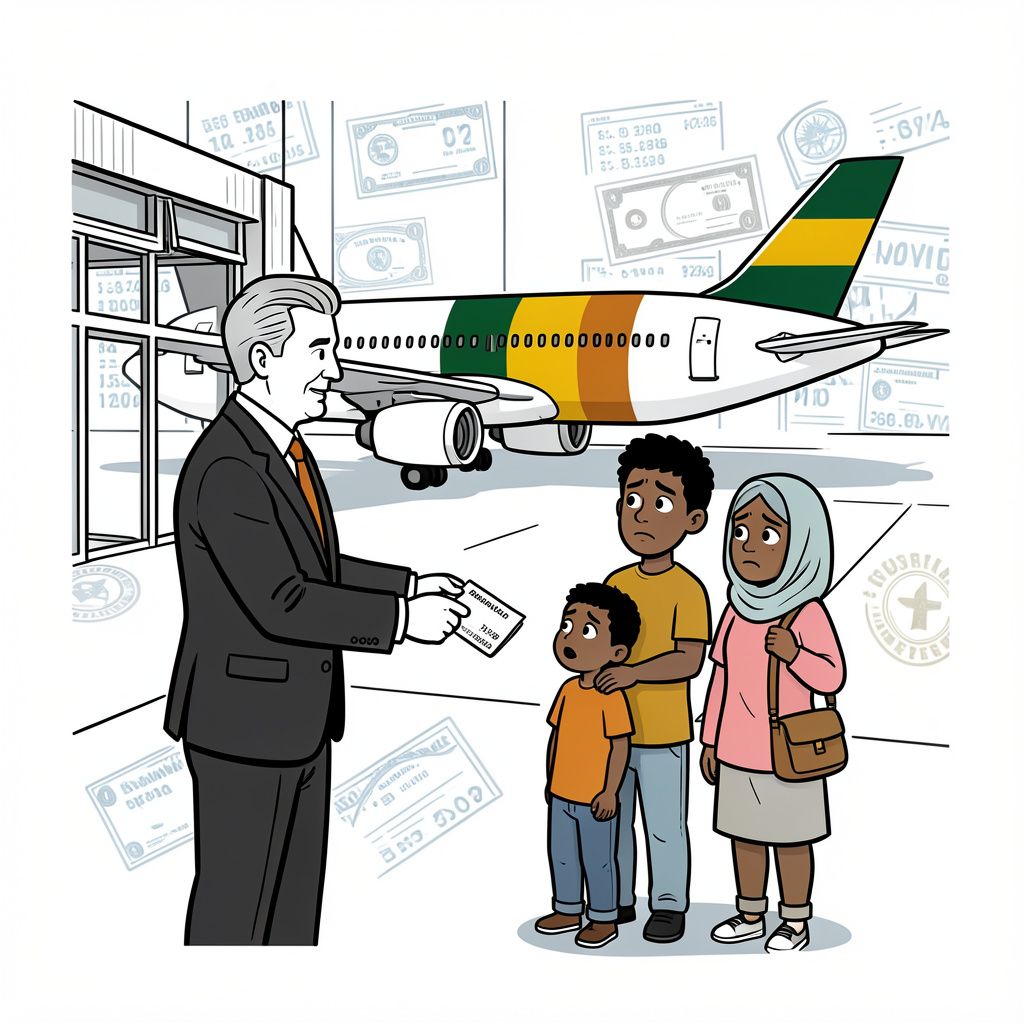
Recent U.S. enforcement tactics reveal non-African migrants are being forcibly deported to unfamiliar African nations like Liberia, triggering intense legal scrutiny and reports of severe mistreatment during transit.
Allegations of Abuse and Detention Conditions
On 20 August 2026, a deportation flight carrying over two dozen detainees arrived at the international airport outside Monrovia, Liberia, marking a significant escalation in U.S. immigration enforcement tactics [1]. Ten deportees reported experiencing or witnessing abusive treatment by Immigration and Customs Enforcement (ICE) agents during detention and transit, including shackling of wrists and ankles, denial of toilet access, and physical beatings [1]. Leonardo Sánchez, a 49-year-old Cuban detainee, alleged that agents refused to remove restrictive restraints or provide medical aid despite his severe abdominal pain and physical inability to control his bladder during the flight from Louisiana to West Africa [1]. As of 30 August 2026, reports surfaced detailing that detainees were kept uninformed of their destination until seeing Liberia on an ICE official’s paperwork in Louisiana, leading to panic and subsequent alleged physical altercations involving agents slamming detainees to the ground [1].
Expansion of Third-Country Deportation Agreements
Over a 10-day period ending on or before 29 August 2026, the Trump administration executed three ICE deportation flights transporting more than 100 individuals to eight countries across Africa, averaging 10 deportees per day [2]. These deportees included nationals from Afghanistan, Cuba, Nicaragua, Iran, Nepal, Turkey, Venezuela, and various African countries, none of whom were citizens of the nations where they were dropped off [2]. The Trump administration is increasingly utilizing ICE deportation flights to send individuals, including those with withholding of removal protections, to third-party countries such as Eswatini, South Sudan, Sierra Leone, and the Central African Republic [2]. Carlos Tellez Sanchez, a 35-year-old Venezuelan national, was deported to Liberia on 21 August 2026, after spending eight months in detention despite having no criminal convictions and previously granted protection from deportation to Venezuela [3]. He is currently residing in a hotel over one hour from Monrovia with other deportees from Brazil, Colombia, and Honduras [3].
Legal and Diplomatic Repercussions
On 23 August 2026, the Department of Homeland Security (DHS) asserted that if an individual refuses to return to their home country, the government is legally required to find a safe and secure third nation, offering a $3,000 incentive for voluntary returns [2]. DHS records indicate Tellez Sanchez was previously deported once before re-entering illegally in 2021, was released under the Biden administration, and was subsequently arrested by ICE during a check-in appointment on 19 December 2025 [3]. The Trump administration has intensified immigration enforcement in summer 2026, securing third country deportation agreements with numerous nations, including South Sudan and the Central African Republic, allowing ICE to remove detainees to countries other than their nation of origin [3]. For business leaders and policymakers, these emerging diplomatic and legal controversies signal potential risks for federal contracting oversight, international relations, and labor mobility discussions [1][3].