Türkiye Launches Investigation into Border Flag Attack Amid Regional Tensions
Ankara, Tuesday, 20 January 2026.
Ankara labels a YPG-linked attack on its flag at the Nusaybin border an “open provocation,” launching an immediate investigation into the incident that underscores persistent volatility along NATO’s southern flank.
Official Condemnation of Border Provocation
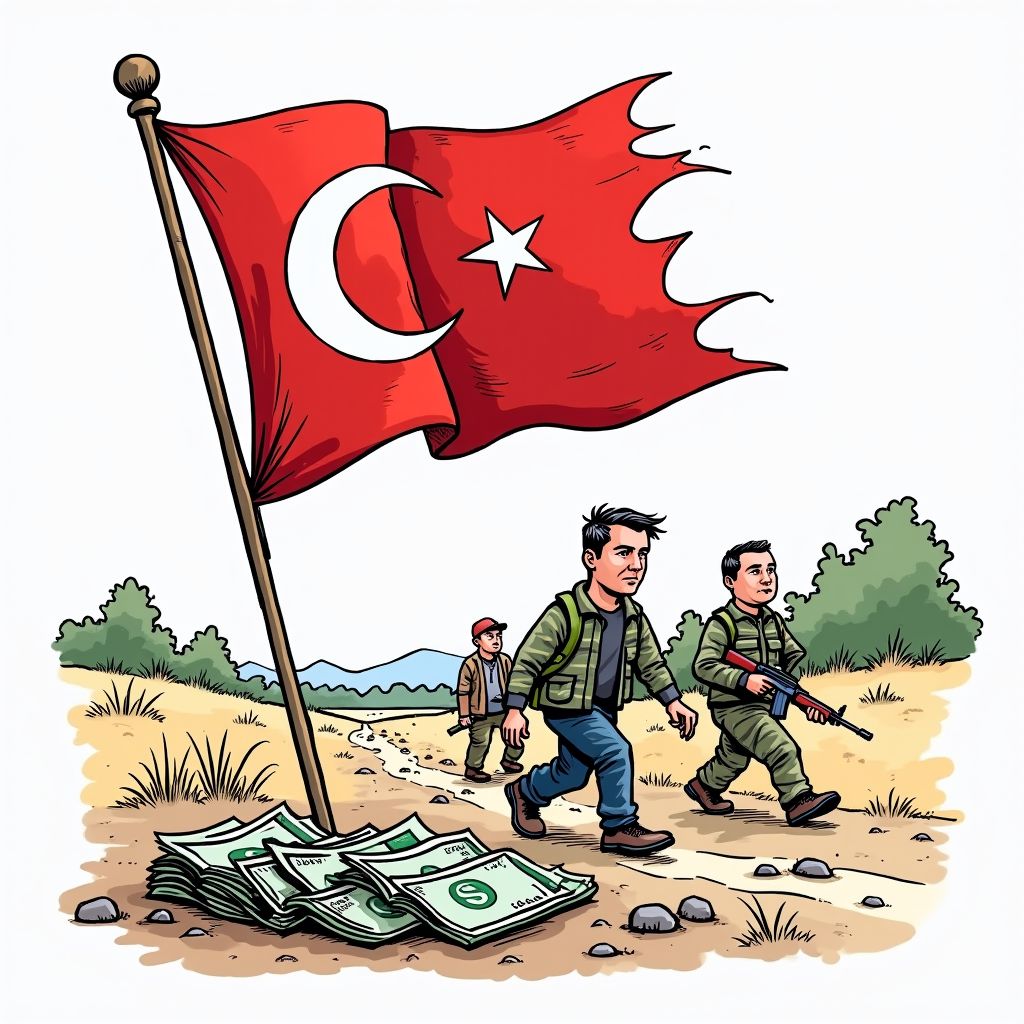
Turkish officials have responded with severity to an incident occurring on Tuesday, January 20, 2026, along the nation’s southern frontier. According to the Turkish Defense Ministry, an administrative investigation has been launched following an attempt by YPG sympathizers to cross the closed border gate in Nusaybin, located across from the Syrian city of Qamishli [4]. During this incursion attempt, the group reportedly carried out an attack on the Turkish flag, an act described by Türkiye’s Head of Communications, Burhanettin Duran, as a “treacherous attack” and an “open provocation targeting the nation’s peace” [1][4]. Duran, issuing statements via the Turkish social media platform NSosyal, emphasized that the incident represents a deliberate effort by “dark forces” to sabotage Ankara’s objective of establishing a terrorism-free environment [1][4].
Administrative and Judicial Response
The reaction from Ankara has been swift, with the Defense Ministry confirming the immediate commencement of legal procedures regarding the breach at the Nusaybin-Qamishli line [4]. Duran asserted that the perpetrators and the organizational structures supporting them would be identified within the framework of the rule of law, promising that “no attack or provocation will go unpunished” [1][3]. Echoing this stance, Ömer Çelik, spokesman for the ruling Justice and Development Party (AK Party), characterized the event as a “vile assault” on national values, warning that those responsible would pay a price for targeting the symbol of the republic [3]. Officials maintain that such attempts will fail to weaken the state’s determination or disrupt national unity [1].
Collapse of the Syrian Integration Deal
This border volatility occurs against the backdrop of a rapidly deteriorating security architecture in northeastern Syria. Just days prior, on Sunday, January 18, Syrian President Ahmad al-Sharaa had announced a comprehensive agreement aimed at integrating the YPG into the Syrian state apparatus [3]. The deal outlined the withdrawal of YPG military formations east of the Euphrates River and the transfer of administrative control over the Raqqa and Deir el-Zour provinces to the central government in Damascus [3]. Furthermore, the agreement mandated the handover of critical infrastructure, including oil fields and border crossings, and the vetting of YPG personnel for integration into the Syrian Defense and Interior Ministries [3].
Renewed Clashes and Regional Instability
However, the diplomatic breakthrough appears to have been short-lived. Negotiations between the YPG and Damascus collapsed on Monday, January 19, after the Syrian government refused the group’s request to extend the deadline for deploying armed forces to occupied areas [3]. The breakdown in talks has precipitated immediate violence; by Tuesday, clashes had erupted between the Syrian army and the YPG near Hassakeh as the latter attempted to halt the army’s advance [3]. The attack on the Turkish flag at Nusaybin thus aligns with this broader escalation, marking a blow to the YPG’s decade-long project of autonomy as it faces pressure from both the Syrian state’s rapid territorial gains and Türkiye’s resolute counterterrorism stance [3].