How Advanced Recycling is Turning the Global Plastic Crisis into Lucrative Revenue Streams
New York, Wednesday, 6 May 2026.
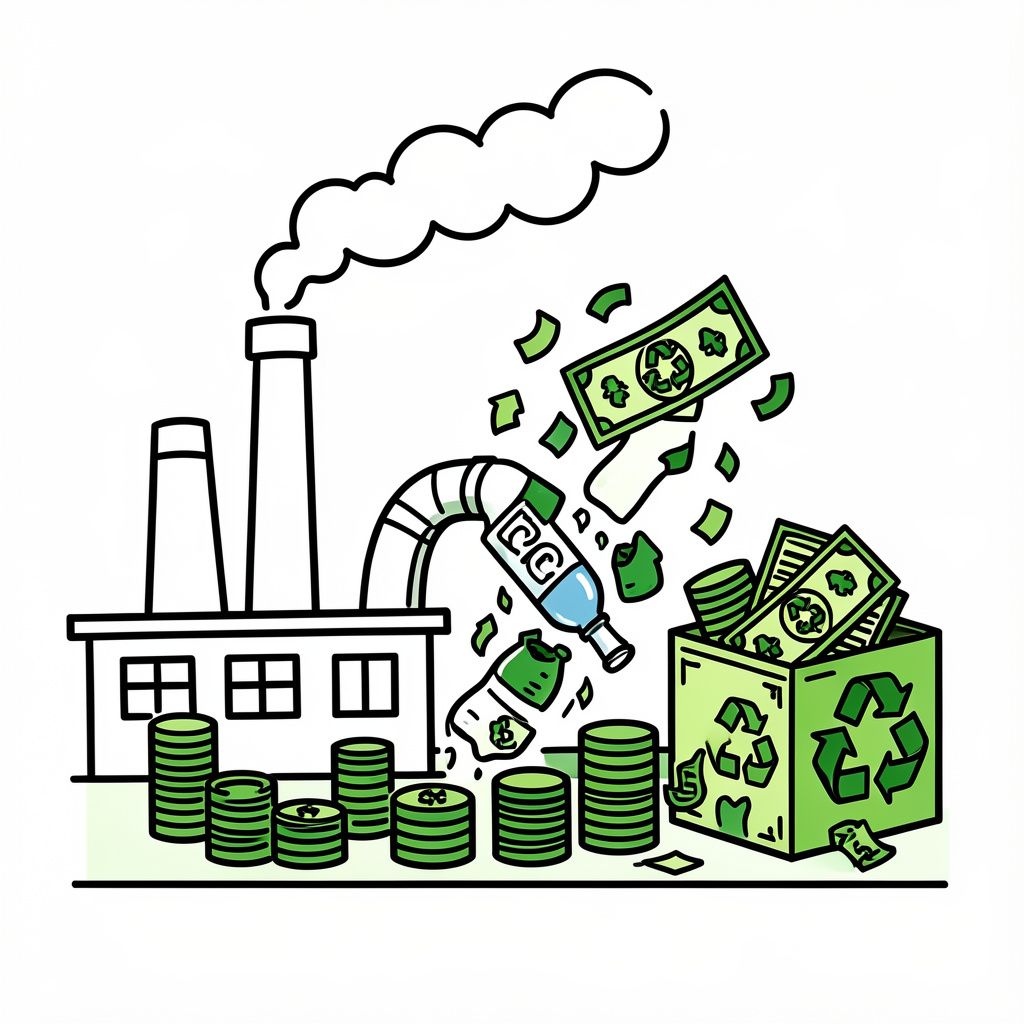
A May 2026 chemical recycling breakthrough converts discarded plastics into valuable raw materials in minutes, transforming a trillion-dollar environmental crisis into a massive economic opportunity.
The Economic Weight of the Plastic Crisis
The global economy currently wrestles with over 400 million tonnes of plastic produced annually, a figure projected to climb to 500 million tonnes by 2031 [1]. Concurrently, other global estimates place annual plastic production even higher, at over 460 million tonnes [2]. The financial toll of this industrial-scale output is staggering. The United Nations Development Programme (UNDP) estimates that plastic pollution has caused up to $600 billion in environmental damage and ecosystem losses to date, which, when combined with $250 billion in annual healthcare costs, creates a staggering 850 billion economic burden [1]. Traditional disposal methods represent a massive financial drain, costing municipalities and governments up to $13.3 billion annually to manage [1]. In the United Kingdom alone, roughly 80% of plastic waste is either incinerated, sent to landfills, or lost to the ocean due to a lack of commercial recycling technology [4].
Depolymerization and High-Value Chemical Yields
To capitalize on this imperative, innovative companies are pioneering depolymerization technologies that break down complex polymers into valuable chemical building blocks. Denovia, for instance, has developed a proprietary liquid process that depolymerizes mixed, contaminated plastics and textiles in approximately five minutes using moderate heat [1]. This system, known as the PL5000, processes roughly two tonnes per batch and can recover terephthalic acid at a remarkable 98.3% purity [1]. By transforming waste into high-grade raw materials, Denovia’s process shifts waste management from a cost center to a profit generator, potentially yielding $4,000 to $8,000 in output value per batch [1]. As Denovia’s founder Nick Spina noted, this technology turns a guaranteed loss into a scalable revenue stream [1].
Synergizing Waste Streams for Clean Energy
Beyond chemical recovery, researchers are unlocking methods to convert plastic waste into clean energy, addressing dual crises simultaneously. A study published on May 4, 2026, in Angewandte Chemie International Edition detailed a novel process developed by researchers at the University of Cambridge and the University of St Andrews [3]. This method utilizes concentrated sulfuric acid extracted from recycled car batteries to hydrolyze hard-to-recycle plastics like polyethylene terephthalate (PET), polyurethane, and nylon at 140°C [3]. Using a molybdenum metal catalyst and solar power, the process oxidizes the resulting ethylene glycol to generate electrons, which subsequently convert protons into clean hydrogen fuel [3]. By repurposing old battery acid instead of fresh chemicals, the system creates a highly sustainable, circular upcycling loop [3].
Scaling Up for Industrial Application
Bridging the gap between laboratory prototypes and commercial viability remains the central challenge for advancing plastic waste solutions.