Hospitals Face One-Year Deadline to Fix Emergency Room Wait Times Before Public Rankings Begin
Washington, Monday, 12 October 2026.
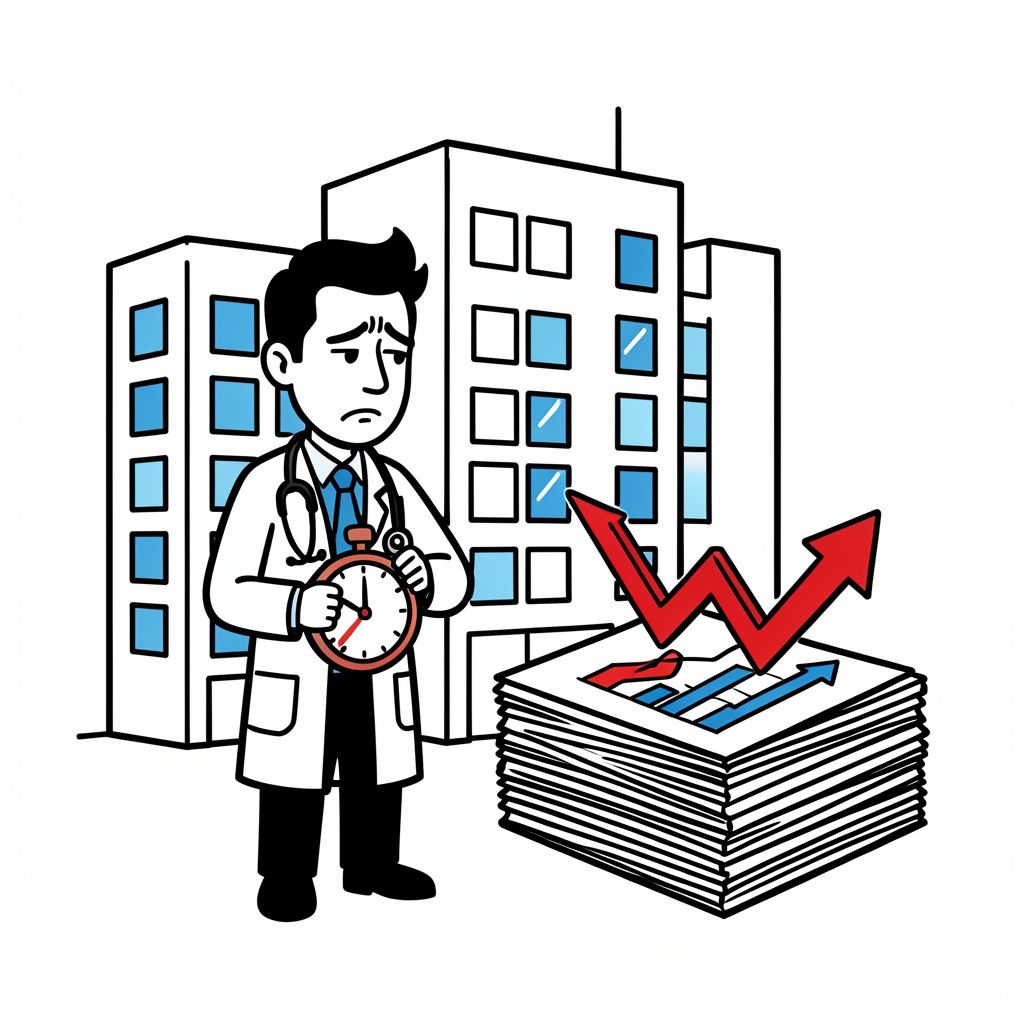
With emergency room failure rates reaching 28.7%, hospitals have roughly one year to fix wait times before mandatory public reporting and financial penalties take effect under new government rules.
Regulatory Timeline and Public Reporting Mandates
The Centers for Medicare & Medicaid Services (CMS) is implementing four new emergency department access and timeliness measures, known as ECAT metrics, with data collection scheduled to begin in 2027 [1]. Healthcare facilities face a critical preparation window of approximately one year from October 12, 2026, before performance results become public and are benchmarked against peer hospitals [1]. While data collection initiates in 2027, the reported metrics will appear on Medicare’s Care Compare website in 2028, allowing patients and insurers to assess facility performance [1]. Financial consequences are structured on a delayed timeline, with payment penalties tied to performance officially beginning in 2030 [1]. This phased approach provides hospitals a specific timeframe to overhaul operations before reputational and fiscal impacts materialize under value-based care frameworks [1].
Escalating Access Failures and Operational Strain
Operational bottlenecks have intensified significantly over the past decade, according to a 2025 Yale study published in JAMA Health Forum that analyzed approximately 149 million emergency department visits [1]. The study found that access failure rates rose from 18.5% in 2017 to 28.7% in 2024, representing a substantial increase in patients experiencing delays [1]. The percentage increase in access failure rates over this period is calculated as 55.135 [1]. Emergency departments are increasingly described as being at a breaking point, particularly regarding boarding where fully admitted patients are held in the emergency department due to unavailable inpatient beds [2]. The four specific ECAT thresholds focus on arrival to treatment room times exceeding one hour, boarding after admission decisions exceeding four hours, overall length of stay for discharged patients exceeding eight hours, and patients who leave before clinician evaluation [1].
Financial Pressures and Payment Model Shifts
Beyond emergency department metrics, broader regulatory changes are influencing hospital economics and physician compensation structures [3]. Proposed CMS changes indicate that doctors may receive reduced payments if procedures are performed on the same day as patient examinations, a shift argued to result in less efficient care and higher overall health care costs [3]. These financial pressures compound the operational costs associated with mitigating extended boarding and prolonged length of stay on CMS ECAT measures [1]. Hospitals that perform well under the new metrics will be those that treat these requirements as part of daily operations rather than viewing them as a mere compliance deadline [1]. The economic imperative is clear, as failure to adapt could lead to severe reputational damage when data becomes publicly accessible in 2028 [1].
Strategic Preparation for Healthcare Leaders
Emergency Care Partners (ECP) advises hospitals to utilize the current timeframe to address operational bottlenecks and prevent severe financial impacts [1]. Partner hospitals utilizing ED-led 24/7 observation units report metrics such as door-to-provider times under 15 minutes and boarding times under 60 minutes, demonstrating feasible operational targets [1]. Healthcare executives are urged to ensure they have partners in the emergency department who focus on collaborative resource management rather than administrative finger-pointing [1]. With data collection starting in 2027 and penalties arriving in 2030, the window to implement structural changes is finite [1]. Hospitals may request readiness assessments to gauge their preparedness against the upcoming ECAT thresholds before the public disclosure period begins [1].