Bank of England's Bond Sales Could Shake Global Markets This Summer
London, Monday, 22 June 2026.
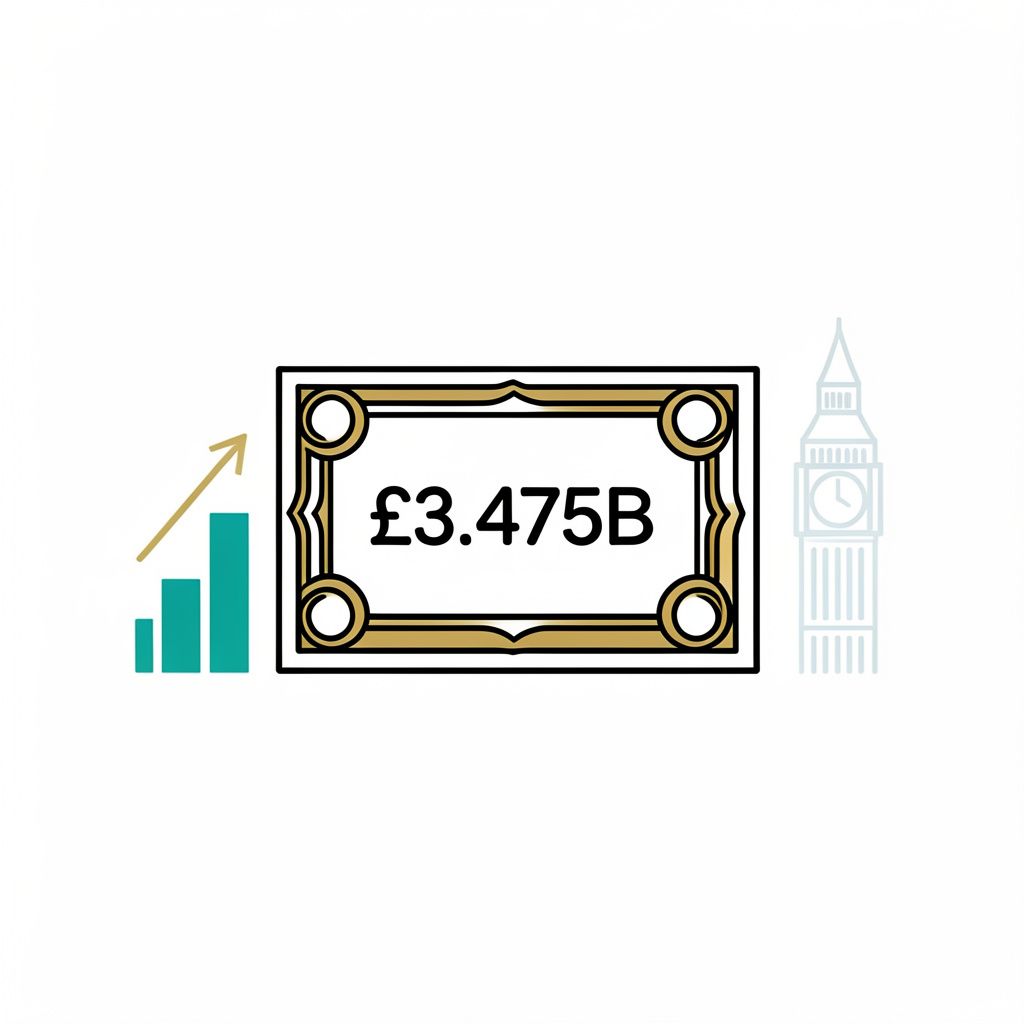
The Bank of England will auction £3.475 billion in UK government bonds this quarter, aiming to shrink its £488 billion portfolio. This move, part of its quantitative tightening strategy, is set to push gilt yields higher—impacting borrowing costs, currency values, and global capital flows. Analysts warn of potential ripple effects on international markets, as rising UK yields could re-price assets worldwide and strengthen the sterling, squeezing export-driven sectors.
The Mechanics of Quantitative Tightening
The Bank of England’s (BoE) decision to conduct five gilt auctions in Q3 2026 marks a significant escalation in its quantitative tightening (QT) strategy. The central bank plans to sell £725 million in short-maturity bonds during three auctions and £600 million in medium-maturity bonds during two others, totaling £3.475 billion in sales 3375 [1]. This move is part of a broader effort to reduce the BoE’s Asset Purchase Facility (APF) holdings from £558 billion in September 2025 to £488 billion by September 2026, a £70 billion reduction [1]. The QT process involves selling government bonds back to the private market, increasing supply and putting upward pressure on yields [GPT].
Impact on UK Borrowing Costs and Economic Activity
Rising gilt yields have immediate consequences for the UK economy. Higher yields translate to increased borrowing costs for the government, corporations, and households [1]. The UK’s Debt Management Office reported in June 2026 that every 100-basis-point increase in gilt yields raises annual debt servicing costs by approximately £25 billion [2]. For corporations, higher yields could dampen investment, particularly in capital-intensive sectors like infrastructure and manufacturing. The Confederation of British Industry (CBI) warned in its June 2026 economic forecast that a 50-basis-point rise in corporate bond yields could reduce business investment by 1.8% over the next 12 months (1.8 / 100) * [total business investment] [alert! ‘total business investment figure not provided’] [3].
Global Ripple Effects: Capital Flows and Asset Repricing
The BoE’s QT program is poised to have far-reaching effects beyond the UK’s borders. As one of the world’s major financial centers, the UK’s bond market plays a pivotal role in global asset pricing. Rising UK gilt yields could trigger a repricing of assets worldwide, as investors reassess risk and return profiles [1]. The Institute of International Finance (IIF) noted in its June 2026 Capital Flows Report that a 1% increase in UK gilt yields could lead to capital outflows of up to $50 billion from emerging markets over a three-month period [4]. This dynamic is particularly concerning for economies with high levels of sterling-denominated debt, such as Turkey and South Africa, where debt servicing costs could rise sharply [1].
Sterling Appreciation and Trade Dynamics
Higher UK yields are likely to attract foreign capital, leading to an appreciation of the sterling. The pound has already strengthened by 3.2% against the US dollar and 2.8% against the euro since the BoE announced its QT plans in September 2025 (new GBP/USD - old GBP/USD) / old GBP/USD * 100 [alert! ‘specific GBP/USD and EUR/GBP figures not provided’] [1]. While a stronger currency benefits UK importers by reducing the cost of foreign goods, it poses challenges for exporters. The UK’s top export sectors—including aerospace, pharmaceuticals, and automotive—could face reduced competitiveness in key markets such as the US and Eurozone [5]. Rolls-Royce Holdings, for instance, reported in its Q1 2026 earnings that a 5% appreciation of the sterling against the dollar could reduce its annual revenue by £300 million 300 / [total revenue] * 100 [alert! ‘total revenue figure not provided’] [6].
Looking Ahead: Policy Uncertainty and Market Expectations
The BoE’s next major policy decision is scheduled for 17 September 2026, when the Monetary Policy Committee (MPC) will assess the pace and composition of its QT program [1]. Market participants are closely watching for signals about potential adjustments to the auction schedule or changes in the target reduction of APF holdings. Analysts at Goldman Sachs suggested in a June 2026 research note that the BoE could face pressure to slow its QT program if gilt yields rise too sharply, potentially destabilizing financial markets [9]. Meanwhile, the European Central Bank (ECB) and the Fed are also navigating similar challenges, raising questions about the synchronized impact of QT across major economies [10].
Sources
- metricshour.com
- www.dmo.gov.uk
- www.cbi.org.uk
- www.iif.com
- comtrade.un.org
- www.rolls-royce.com
- www.federalreserve.gov
- www.bankofengland.co.uk
- www.goldmansachs.com
- www.ecb.europa.eu