Rebecca Solnit’s New Manifesto Targets Resilience in an Era of Global Polycrises
London, Saturday, 7 March 2026.
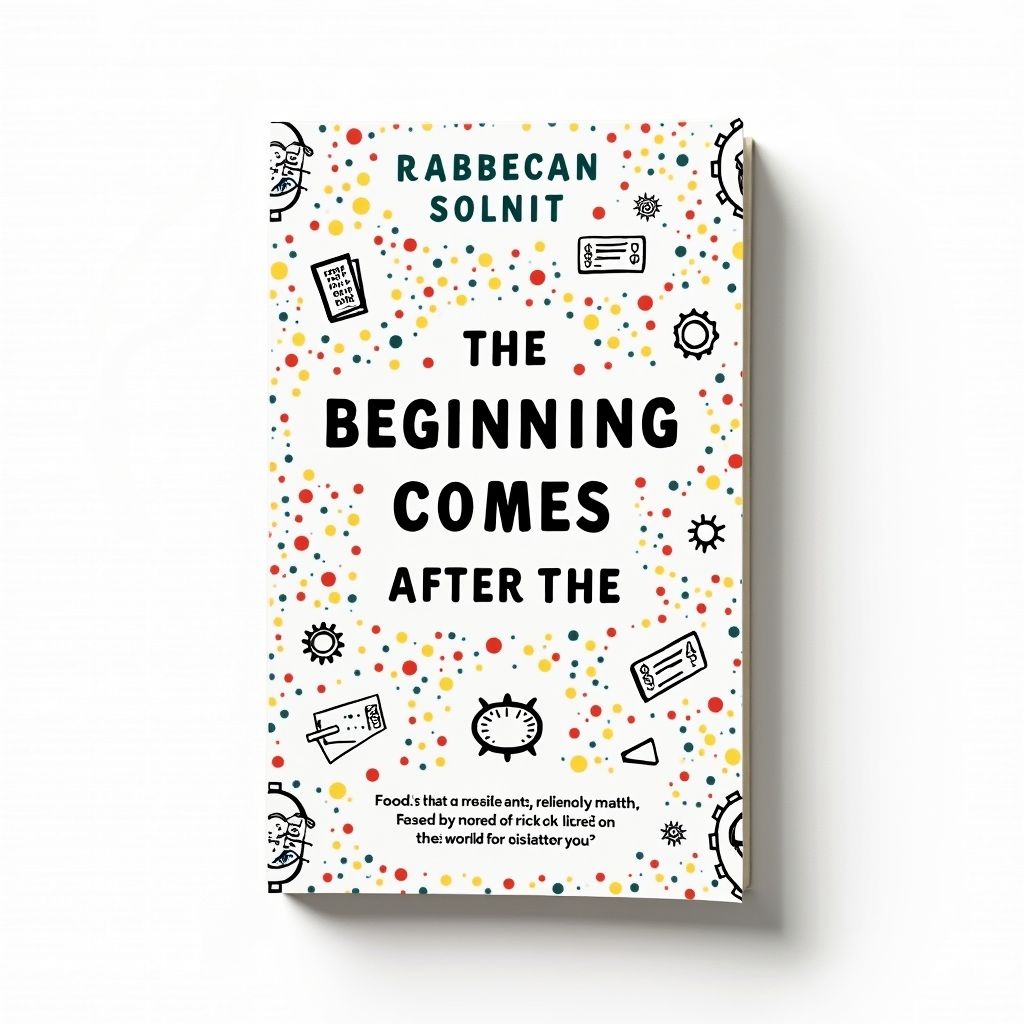
Released on March 3, 2026, Rebecca Solnit’s The Beginning Comes After the End has been highlighted by New Scientist as a critical text for navigating today’s “polycrises.” Serving as a sequel to Hope in the Dark, this manifesto reframes hope not as passive optimism, but as “potentiality without delusion”—a vital concept for leaders facing democratic backsliding and economic volatility. Solnit argues that current authoritarian surges are merely retaliatory backlashes against inevitable social progress. By analyzing the dismantling of old civilizations to build interconnected new ones, the book offers a strategic framework for resilience. For economic observers, this publication signals a shift where scientific and cultural literature increasingly intersects with business strategy, providing tools to withstand the psychological and structural demands of a rapidly changing global landscape.
Reframing Historical Volatility
At the heart of The Beginning Comes After the End, published on March 3, 2026, lies a rigorous re-evaluation of historical trajectories [2][4]. Solnit posits that the current rise of white nationalist and authoritarian movements is not a sign of progressive failure, but rather a fierce, retaliatory backlash against the inevitable dismantling of an old civilization [2][4]. This perspective shifts the narrative for social and economic analysts: rather than viewing current volatility as a permanent regression, Solnit frames it as the turbulence inherent in building a new, interconnected world—a theme she explores as a direct sequel to her bestseller Hope in the Dark [2][5]. For Solnit, the focus is less on optimism and more on “praxis,” defined as grounded action in iterative dialogue with critical thought [4].
The Science of Interconnection
This thematic focus on interconnection extends beyond sociology into the broader scientific literature selected by New Scientist for March 2026 [1]. Alongside Solnit, Suzanne Simard’s new book, When the Forest Breathes, challenges traditional biological competition models by highlighting the profound intelligence and connectivity of trees, continuing her work with The Mother Tree Project [1]. Similarly, Jamie Bartlett’s How to Talk to AI navigates the cognitive landscape of artificial intelligence, addressing both its utility and the conspiracy theories that arise from its misuse [1]. Together, these works suggest a publishing trend that favors systemic understanding over isolationism, providing readers with intellectual tools to parse complex ecological and technological networks.
Analyzing the “Monsters” of Transition
Solnit utilizes Antonio Gramsci’s observation that “monsters arise” when the old world is dying and the new is slow to appear to diagnose contemporary geopolitical friction [4]. This friction is palpable in current administrative controversies, such as those surrounding Project Salt Box. Investigations indicate that the Trump administration recently paid $105 million for a warehouse in western Maryland valued at only $70 million—representing a premium of 50%—to expand immigrant detention capacities [4]. Solnit characterizes such expansions in enforcement as “creatively cruel” projects that emerge in the vacuum between epochs [4].