Celsia Expands Production in Taiwan to Address Critical Semiconductor Cooling Demands
Taoyuan, Thursday, 29 October 2026.
Celsia has expanded into a new 3,716-square-meter Taiwan facility, scaling production of mission-critical cooling systems to meet surging power and heat demands in high-performance computing, aerospace, and defense hardware.
Strategic Expansion in Response to Semiconductor Heat Challenges
Celsia Inc. (privately held) has inaugurated a 3,716-square-meter (40,000-square-foot) manufacturing facility in Taoyuan, Taiwan, on September 1, 2026 [1][2][3]. The facility’s primary objective is to address the escalating thermal management requirements of next-generation semiconductors powering high-performance computing (HPC), aerospace, and defense systems. According to company CEO George Meyer, the expansion enables Celsia to scale production of custom heat sinks and two-phase thermal solutions, which are critical for dissipating heat from densely packed, power-intensive chips [1][2][3]. ‘As electronic systems become more powerful and thermal requirements more demanding, customers need solutions engineered for their specific applications,’ Meyer stated, emphasizing the facility’s role in supporting mission-critical programs across multiple industries [1][2][3].
Operational Capabilities and Industry Compliance
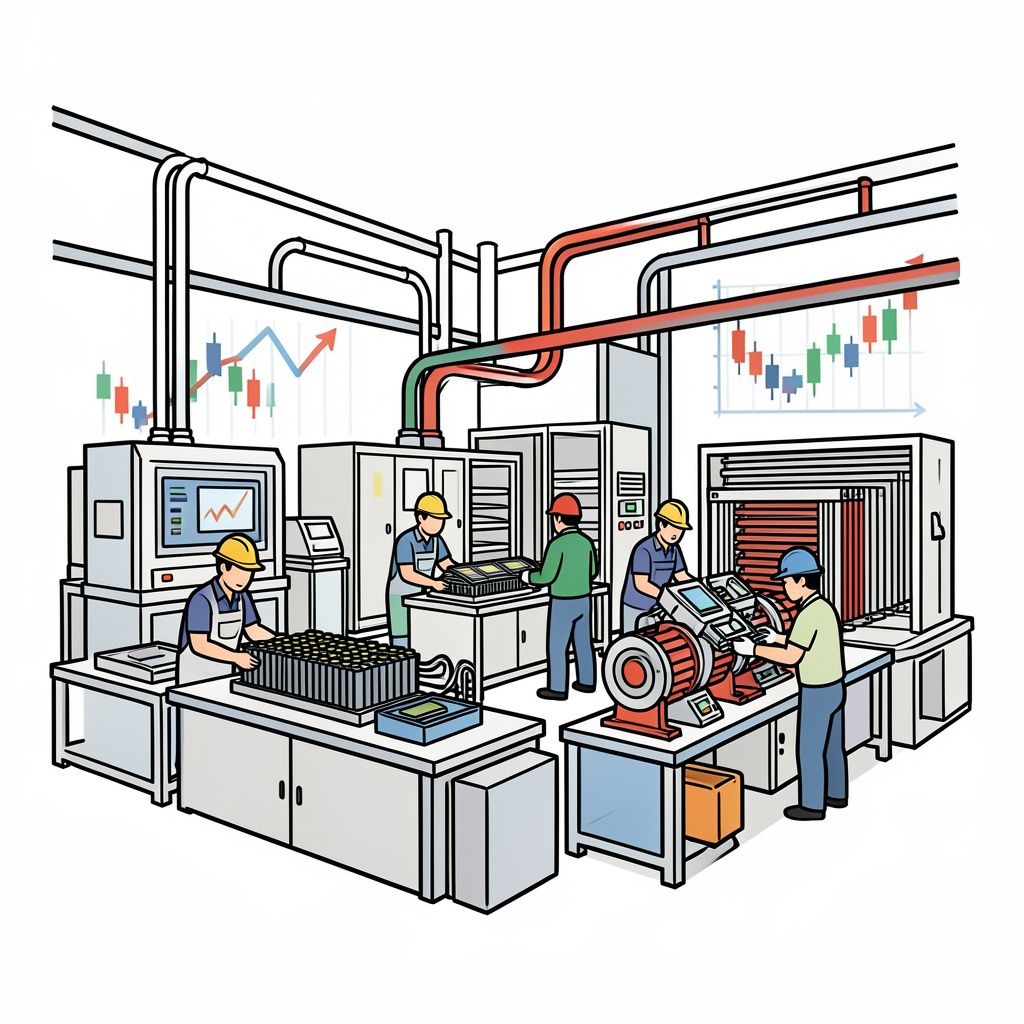
The Taoyuan facility is equipped with specialized machinery, including automated wick sintering, high-vacuum degassing, precision stamping, and custom fluid charging systems [1][2][3]. It also features automated thermal performance testing, shock and vibration testing, thermal shock, thermal cycling, and 100% helium leak testing to ensure product reliability and compliance with stringent aerospace and defense standards [1][2][3]. Celsia maintains ITAR registration, which is essential for handling sensitive defense and aerospace applications, while its U.S.-based engineering team continues to lead thermal design and prototyping efforts [1][2][3]. ‘By combining our U.S.-based engineering expertise with expanded manufacturing capabilities in Taiwan, we’re better positioned to support customers from initial thermal design through production,’ Meyer added [1][2][3].
Market Positioning and Growth Trajectory
Founded in 2004 and headquartered in Harbeson, Delaware, Celsia specializes in designing and manufacturing custom heat sinks, vapor chambers, heat pipes, and thermosiphons for defense, aerospace, telecom, and electronics sectors [1][2][3]. The company holds over 30 active patents and is ISO 9001 certified, underscoring its commitment to quality and innovation [1][2][3]. The expansion aligns with the surging demand for advanced thermal solutions driven by the proliferation of 5G infrastructure, data center acceleration, and AI-driven computing workloads [GPT]. Industry analysts note that the global thermal management market is projected to grow at a CAGR of 8.3% from 2023 to 2030, reaching $21.6 billion by 2030, with cooling solutions for high-performance computing and defense applications being key growth drivers [alert! ‘market projections require independent verification’].
Supply Chain and Future Outlook
The Taoyuan facility’s strategic location in Taiwan—a global hub for semiconductor manufacturing—positions Celsia to better serve its customer base in Asia-Pacific, particularly for programs requiring rapid prototyping and high-volume production [1][2][3]. The company’s dual U.S.-Taiwan operational model ensures a resilient supply chain, combining American engineering rigor with Asian manufacturing scalability [1][2][3]. Looking ahead, Celsia plans to leverage the facility to support an increasing number of programs, particularly in defense modernization and next-generation computing initiatives [1][2][3]. As Meyer noted, ‘This facility strengthens our ability to support a growing number of programs while continuing to deliver the custom thermal solutions and engineering expertise our customers rely on.’