Trump Ties Landmark Saudi Nuclear Deal to Peace Treaty With Israel
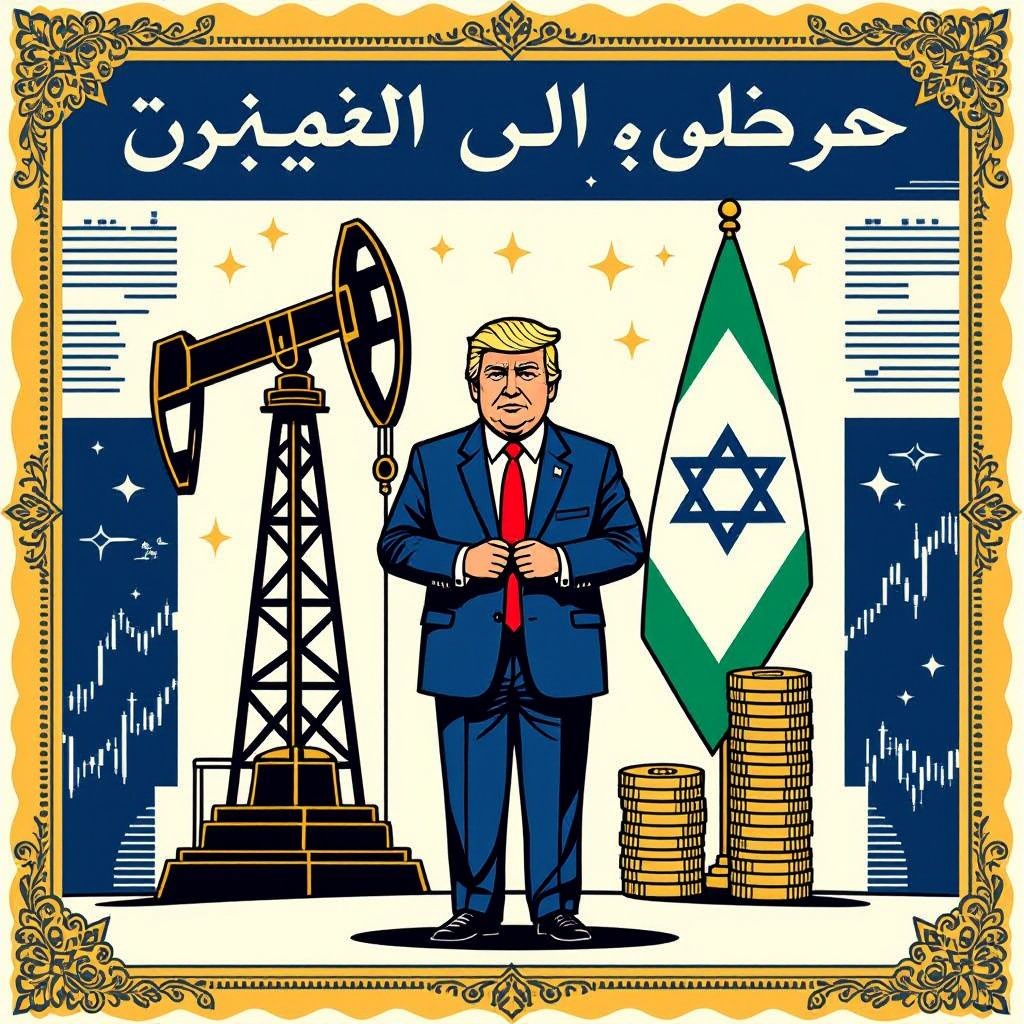
Washington, Thursday, 23 July 2026.
President Trump has conditioned a new civilian nuclear deal on Saudi Arabia normalizing relations with Israel, tying a major energy partnership to landmark Middle East diplomacy.
A Dramatic Pivot in Washington’s Nuclear Strategy
This sudden shift follows the Trump administration’s recent approval of a landmark 30-year nuclear cooperation agreement with Saudi Arabia [1]. That initial bilateral deal, signed on July 22, 2026, by U.S. Energy Secretary Chris Wright and Saudi Energy Minister Prince Abdulaziz bin Salman, was designed to establish a framework for peaceful nuclear energy and security safeguards [4][7]. However, on July 23, 2026, Republican President Donald Trump introduced an unexpected diplomatic ultimatum, declaring that the implementation of this multi-billion-dollar partnership is “totally subject” to Saudi Arabia formally normalizing relations with Israel by joining the historic Abraham Accords [3][4][5].
The Enrichment Redline and Congressional Hurdles
President Trump’s latest declaration also sought to draw a firm line on nuclear proliferation, with the president asserting, “There will be no enrichment of material!” [3][5][7]. This statement introduces significant confusion, as previous reports indicated the bilateral agreement might allow U.S. firms to conduct a joint feasibility study regarding the future construction of a domestic uranium-enrichment facility within Saudi Arabia [4][7]. By explicitly stating that the U.S. is only supportive of non-enriched, civilian nuclear facilities, Trump has effectively restricted the scope of the deal, countering earlier anxieties that the pact lacked the “gold standard” ban on domestic enrichment [2][3][4].
The Path to Congressional Approval
Despite the bilateral signatures on the “123 agreement” and the accompanying safeguards framework, the deal is not yet implemented policy; it represents an executive intent that must be submitted to the U.S. Congress for a mandatory review process [3][4][5]. Nonproliferation advocates on Capitol Hill had already voiced deep concerns on Wednesday, July 22, 2026, warning that bypassing standard safeguards—such as the International Atomic Energy Agency’s (IAEA) “additional protocol” for enhanced inspections—could trigger a regional arms race [2][4]. While the IAEA confirmed on July 23, 2026, that it is ready to implement verification measures upon receiving a formal request from Washington and Riyadh, no such request has yet been submitted [3][5].
Geopolitical Friction and the Shadow of Regional Conflict
This high-stakes diplomatic maneuvering occurs against the backdrop of an active regional conflict. The joint U.S.-Israel war against Iran, which commenced on February 28, 2026, has been raging for approximately five months [3][4]. As of today, Thursday, July 23, 2026, the hostilities have been ongoing for exactly 145 days [3][4]. Israeli Prime Minister Benjamin Netanyahu’s office quickly endorsed Trump’s ultimatum, stating that the military actions against Iran have “created the possibility to expand the circle of peace” and that Saudi Arabia’s entry into the Abraham Accords would mark a historic leap forward [2][4]. However, Riyadh has long insisted that any formal ties with Israel are contingent on concrete progress toward a Palestinian state—a condition that Netanyahu has repeatedly rejected [4][5].
Riyadh’s Strategic Alternatives
By tying the civilian energy partnership directly to Israeli normalization, the Trump administration is employing a high-pressure tactic that could backfire. Analysts warn that forcing Riyadh’s hand may alienate Saudi leadership, which has spent years diversifying its geopolitical alliances, including joining the Shanghai Cooperation Organization as a dialogue partner in 2023 [6]. Furthermore, Crown Prince Mohammed bin Salman has previously warned that Saudi Arabia would immediately seek to acquire a nuclear weapon if Iran successfully develops one [5][7]. If the U.S. deal falls through due to the normalization deadlock, Saudi Arabia may look to other international partners, although Secretary of State Marco Rubio has maintained that American companies remain the “best show in town” for the kingdom’s energy transition [4].
A Hardline Ultimatum for Global Markets
Ultimately, the future of this multi-billion-dollar energy partnership rests on whether the Trump administration can successfully broker a historic normalization agreement before the end of the president’s second term [4]. White House Press Secretary Karoline Leavitt reinforced this hardline stance on July 23, 2026, confirming that the Abraham Accords condition has been repeatedly communicated to Saudi leaders and warning that if they do not comply, “the deal is off” [3][5]. For global energy markets and defense contractors, this development transforms a commercial infrastructure deal into a volatile geopolitical chip, leaving the final outcome of the U.S.-Saudi civilian nuclear pact highly uncertain as it heads to a skeptical Congress [2][3][5].