Rising Space Traffic Prompts FAA Warning on Falling Rocket Debris
Washington D.C., Monday, 2 February 2026.
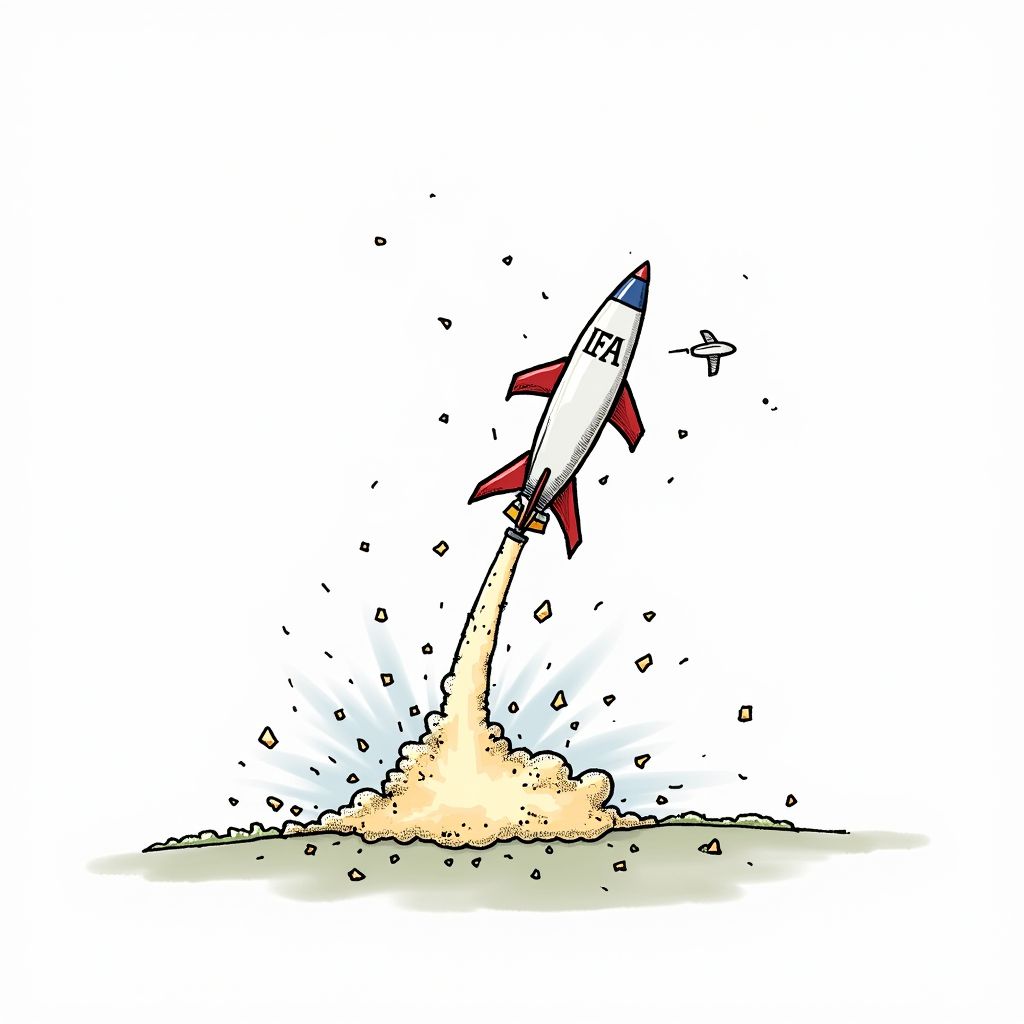
Following investigations revealing pilots were forced to maneuver around exploding rocket debris, the FAA issued a safety alert today urging airlines to exercise extreme caution as commercial launch schedules accelerate.
New Regulatory Guidance
The formal guidance, identified as Safety Alert for Operators (SAFO) 26001 and released today, February 2, 2026, explicitly warns air carriers that space launch and reentry operations could “significantly reduce safety” for aircraft due to potential debris fields [1][4]. This regulatory intervention coincides with a surge in activity within the commercial space sector, most notably by SpaceX (Space Exploration Technologies Corp.), which is seeking approval to expand its Starship trajectories over populated landmasses and key international airways [1]. The FAA has advised pilots to maintain heightened vigilance near Debris Response Areas (DRA), marking a pivotal shift in how aviation authorities manage the intersection of orbital ambition and passenger safety [1].
Operational Risks in a Crowded Sky
The urgency of this alert is underscored by recent near-miss events that have rattled the aviation community. An investigation highlighted by ProPublica revealed that during 2025, pilots were forced to execute maneuvers to clear airspace following explosions of SpaceX’s Starship rockets [1]. Specifically, a Starship failure in March 2025 resulted in falling debris that necessitated temporary ground stops at major airports across Florida, leading to a cascade of flight cancellations and delays [4]. Similar disruptions rippled through the Caribbean in January 2025, affecting flights around Cuba, Haiti, and the Dominican Republic after another failed launch [3].
The Economic Burden on Aviation
The frequency of these interactions is driven by an exponential rise in launch volume. In 2024, the FAA recorded 148 space operations, a figure projected to rise to between 200 and 400 annually by the mid-2030s [4]. This represents a potential increase of up to 170.27 percent in launch activity over the next decade. In 2025 alone, SpaceX launched over 100 rockets, including five Starship test flights, despite having authorization for up to 25 annual Starship launches from its Texas facility [1][3].
Regulatory Friction
The push for safety comes amidst a broader political drive to deregulate the space industry. On August 6, 2025, President Donald Trump signed an executive order aimed at dismantling environmental protection rules to “enhance American greatness in space” and expedite permit approvals for companies like SpaceX [5]. This directive seeks to increase the regularity of novel space activities, including commercial human spaceflight and orbital manufacturing, by 2030 [5]. However, the release of SAFO 26001 signals that the FAA is prioritizing the immediate safety of the traveling public over the unfettered acceleration of launch schedules, acknowledging that the convergence of aviation and space exploration now requires precise timing and scrupulous attention to detail [1][4].