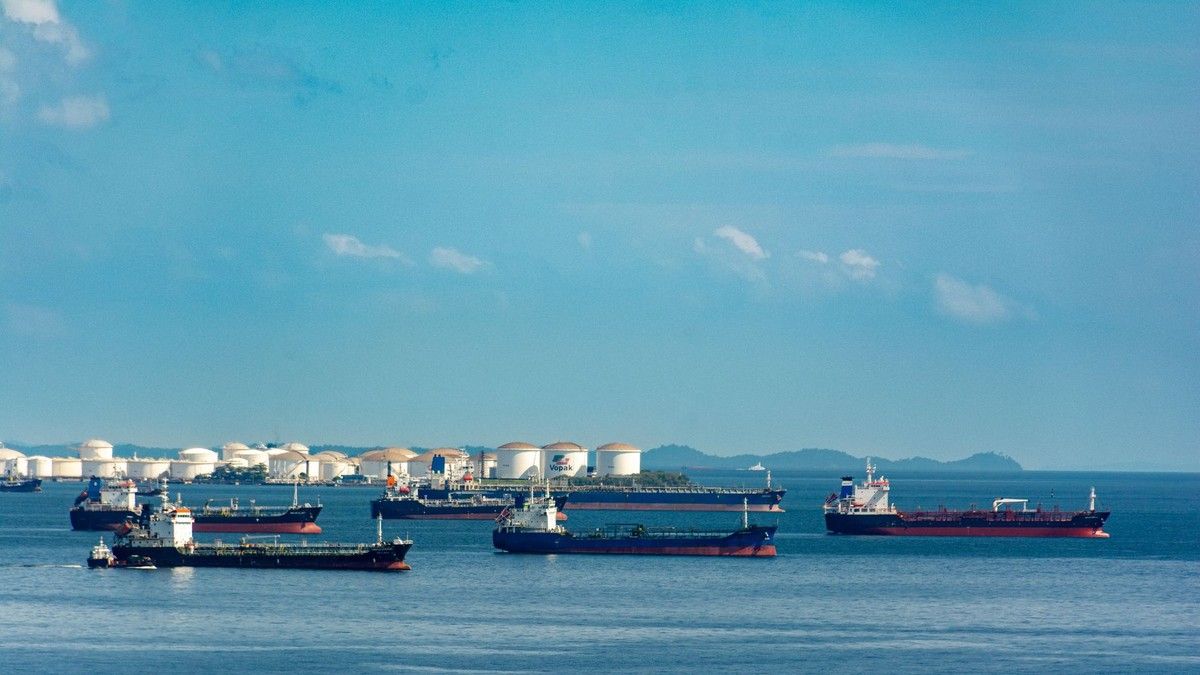
tankers catch fire after striking sea mines near strait of hormuz
Khasab, Saturday, 28 November 2026. Two commercial oil tankers exploded and caught fire after hitting naval mines north of Oman’s Khasab port while attempting an unauthorized passage through the Strait of Hormuz, according to statements from Iran’s Islamic Revolutionary Guard Corps. Iranian authorities stated that one of the burning vessels is a supertanker carrying over two million barrels of crude oil. The crews had reportedly turned off their navigation systems to traverse the contested waterway covertly without prior coordination with Tehran. Concurrently, the United Kingdom Maritime Trade Operations agency documented a separate explosion from an unknown projectile near a tanker roughly 50 nautical miles west of Dubai. Despite escalating shipping risks and elevated maritime insurance premiums in the vital Persian Gulf corridor, global crude oil prices slipped. Brent fell below $94 a barrel as widespread market expectations of excess oil supply outweighed immediate geopolitical disruptions.
unauthorized transit triggers mine strike
The two tankers struck naval mines while attempting an unauthorized passage through the Strait of Hormuz via an uncoordinated route north of Oman’s Khasab port. Iran’s Islamic Revolutionary Guard Corps reported both vessels had navigation systems disabled, relying on covert navigation to avoid Iranian notice [1]. One vessel was a supertanker loaded with more than 2 million barrels of crude oil, which ignited after the explosion [1][2]. The IRGC stated the incident occurred in the early hours of November 26 while vessels were attempting to bypass established transit lanes near Ghanem Island.
second explosion reported west of dubai
The United Kingdom Maritime Trade Operations agency documented a separate explosion from an unknown projectile roughly 50 nautical miles west of Dubai on November 26. The incident involved a tanker but did not result in significant damage or environmental impact, according to UKMTO advisories. Iranian authorities linked the event to broader pressure tactics, with a Revolutionary Guards spokesman stating heavy firepower was deployed to maintain closure of the strait [1]. Since October, Iran has escalated offensive shipping tactics to disrupt Gulf oil flows despite US Navy support.
oil markets shrug off geopolitical tension
Global oil prices slipped despite the mine strikes and escalating risks in the Persian Gulf corridor. Brent crude futures fell 0.009 to $93.79 per barrel while US WTI declined 0.004 to $83.33 per barrel on November 26. Market analysts cited expectations of excess supply outweighing immediate geopolitical disruptions. Global production reached 105.4 million barrels per day in October, with US commercial crude inventories increasing by 1.1 million barrels to 418.9 million by November 20 [3]. OPEC+ ministers are scheduled to meet on November 29 to finalize 2027 production policy amid shifting supply dynamics.
iran’s strategic pressure continues
Iran’s Revolutionary Guard reaffirmed operational control over the Strait of Hormuz, stating safe passage depends on respect for Iran’s sovereign rights [1]. Rear Admiral Ali Azmaei emphasized Iran’s ability to enforce restrictions as a means of pressuring the US economy. The IRGC also claimed vessels were being misled by US military presence, increasing the risk of mine strikes. Analysts note the escalation follows stalled negotiations over freedom of navigation and ongoing US sanctions against Iranian ports.