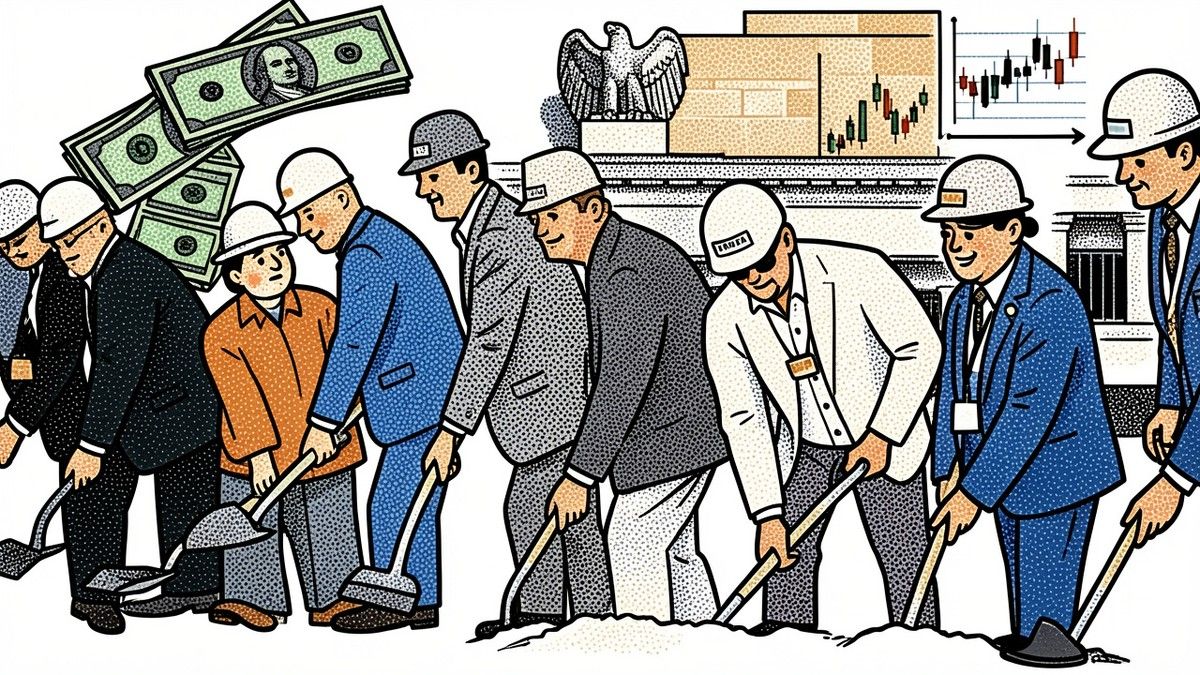
Midwest Economy Stalls as Fed Eyes Likely December Rate Hike
Detroit, Sunday, 29 November 2026. Economic activity across the Midwest has stalled, complicating the Federal Reserve’s upcoming interest rate decision. According to the central bank’s November 25 Beige Book—a periodic survey of regional business conditions—growth in the Chicago District remained flat in October and early November. Meanwhile, the Upper Midwest saw only modest gains in manufacturing and energy, offset by declining loan demand and weak vehicle sales.
High prices are squeezing households. Consumers are trading down to cheaper goods as inflation persists. Yet national data tells a different story. Third-quarter gross domestic product (GDP) was revised up to 4.3%, and October Personal Consumption Expenditures (PCE) inflation—the Fed’s preferred gauge—climbed to 3.8%.
Because the broader U.S. economy remains hot, futures markets now price a 95% chance of a quarter-point rate hike at the Fed’s December 8–9 meeting. For Midwest businesses, higher borrowing costs threaten to deepen an already fragile slowdown.
Regional Divergence Within the Midwest
The Federal Reserve’s November 25 Beige Book reveals a sharp split across Midwest districts. The Chicago District—covering most of Illinois, Indiana, Iowa, Michigan and Wisconsin—saw overall activity remain steady and unchanged from the prior period, with consumer spending flat as shoppers held back ahead of Black Friday promotions. In contrast, the Minneapolis Fed’s Ninth District, spanning Minnesota, Montana, North Dakota, South Dakota, northwestern Wisconsin and Michigan’s Upper Peninsula, posted modest gains. Manufacturing, tourism and energy led growth, while financial services activity and vehicle sales weakened and loan demand declined across several categories [1][2]. Employment ticked up slightly and unemployment claims fell below year-ago levels [2].
National Data Drives December Hike Bets
National figures released Wednesday strengthened the case for tighter policy. Third-quarter GDP was revised up to 4.3%, the fastest pace in three years, while October PCE inflation—the Fed’s preferred gauge—climbed to 3.8% with core PCE at 3.3%. Fed funds futures now price a 95% probability of a quarter-point increase at the December 8–9 Federal Open Market Committee meeting [3]. The central bank last raised rates in September and held the benchmark at 3.75%–4.00% in October. The November jobs report due December 4 will provide the final data point before policymakers convene.
Hawkish Voices and Economic Impact
Several Fed officials have signaled support for further tightening. New York Fed President John Williams stated on November 13 that policymakers “still have work to do,” while St. Louis Fed President Alberto Musalem said on November 17 the economy likely needed “several interest rate increases before the spring of 2027” [3]. Governor Waller floated a half-point hike, citing inflation concerns, and Governors Cook and Hammack dissented in favor of a hike at the October meeting [3]. For Midwest households already trading down to cheaper goods—swapping beef for chicken—and businesses grappling with tariffs and energy costs, a December hike raises borrowing costs and deepens the regional slowdown [1].