independent retailers prepare for pivotal small business saturday amid economic pressures
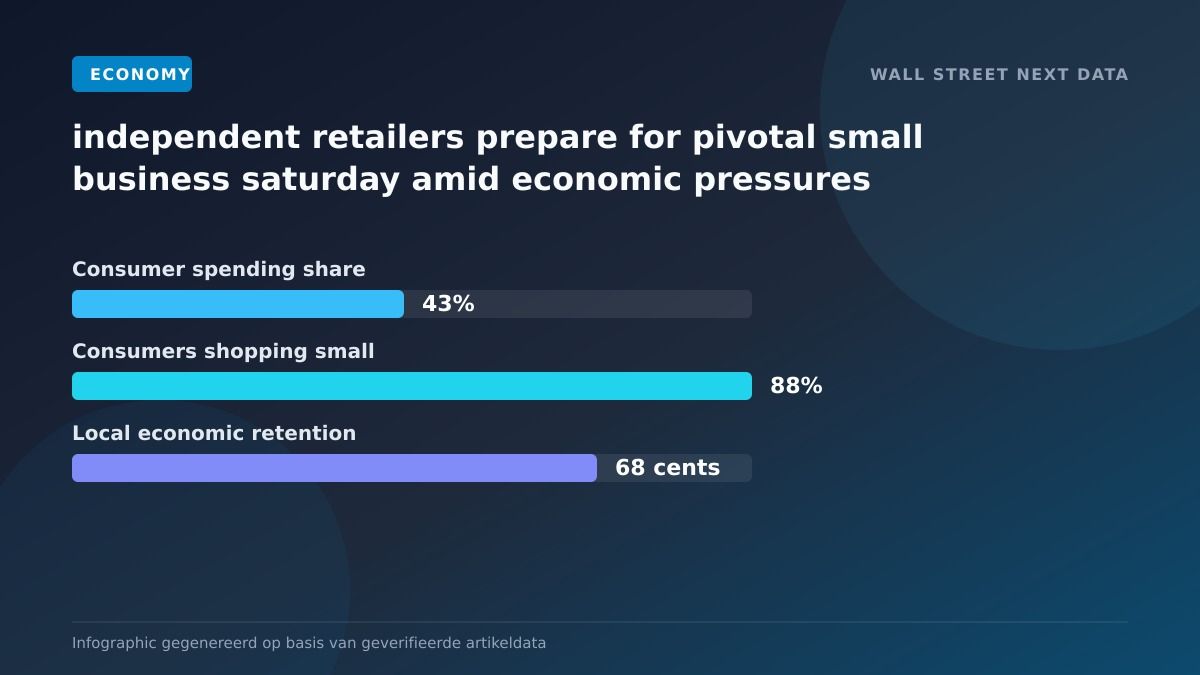
Washington, Friday, 27 November 2026. Independent merchants across the United States are preparing for Small Business Saturday on November 28, 2026. Positioned between Black Friday and Cyber Monday, the annual event represents a critical financial lifeline. An estimated $118 billion holiday shopping opportunity is at stake, according to QuickBooks data. Up to 43 percent of total consumer spending is projected to go to small businesses this season. Moreover, 76 percent of owners anticipate higher earnings than last year, despite stubborn inflation, tariffs, and elevated fuel costs. Research from American Express indicates 88 percent of consumers plan to shop small during the holidays. That support carries significant local impact, as roughly 68 cents of every dollar spent at an independent store remains within the community. Retailers are deploying discounts, complimentary services, and artificial intelligence tools to capture value-conscious shoppers during this essential revenue window.
economic stakes for independent retailers
Small Business Saturday on November 28, 2026, remains a pivotal revenue driver for independent merchants squeezed by inflation and rising operational costs. QuickBooks projects an 118 billion holiday shopping opportunity, while 76% of owners expect higher earnings than last year despite tariffs and fuel expenses [1]..[2]. The event’s stakes are amplified by consumer sentiment: 88% of shoppers plan to prioritize small businesses this season, according to American Express data [1]. Local economic impact is substantial—each dollar spent at a small business circulates 0.68 within the community, underscoring the day’s broader financial significance.
consumer behavior and retail strategies
Value-conscious shoppers are driving retailers to adapt. Discounts ranging from 20% to 30% and complimentary services like gift wrapping are common tactics in downtown St. Joseph, Missouri, where Small Business Saturday events span multiple days [2]. Meanwhile, AI tools are being deployed to streamline inventory management and personalize marketing, aligning with consumer demand for convenience and fast service [1]. These strategies reflect a shift toward omnichannel retail, where online visibility and in-store experiences converge to capture reluctant spenders.
community and policy support
The United States Small Business Administration has co-sponsored Small Business Saturday since 2011, institutionalizing federal support for independent retailers [1]. Local initiatives, such as St. Joe Today’s toy drive and raffle giveaways, further amplify the event’s social impact by combining commerce with charitable outreach [2]. Such efforts highlight how the day bridges economic necessity with community-building, reinforcing the role of small businesses as local anchors.