EPA Champions $1 Billion Plan to Save the Great Salt Lake Amid Tech Water Disputes
Salt Lake City, Sunday, 24 May 2026.
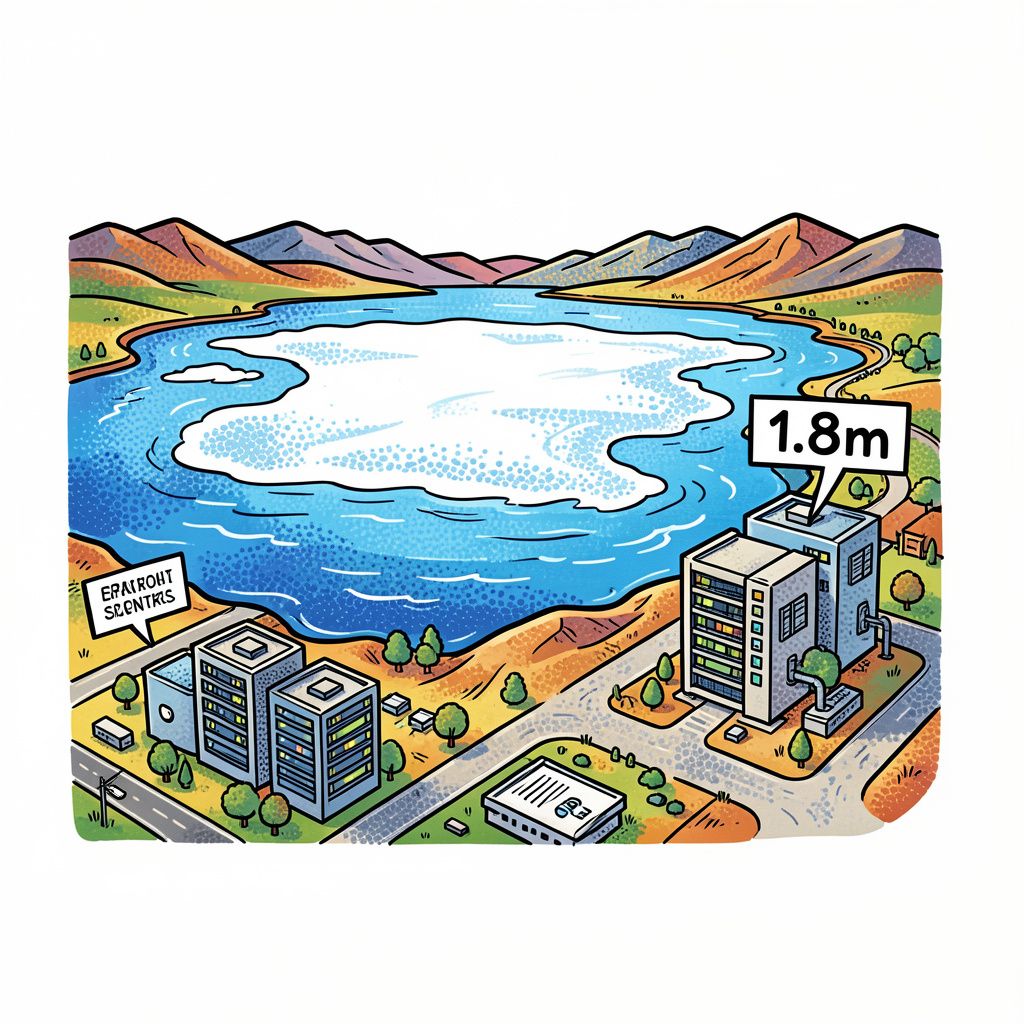
The EPA supports a $1 billion federal initiative to raise the Great Salt Lake by 1.8 meters, even as massive new data centers threaten the region’s scarce water supply.
A Concerted Federal and State Effort
In mid-to-late May 2026, Environmental Protection Agency (EPA) Administrator Lee Zeldin toured the Great Salt Lake’s Farmington Bay alongside a delegation of Utah Republican politicians, including Senator John Curtis, Representative Mike Kennedy, and Utah Senate President Stuart Adams [1][2][3]. The visits aimed to build momentum for President Donald Trump’s proposed $1 billion federal budget request, a plan initially floated in February 2026 [3]. This funding, which currently awaits Congressional approval, is earmarked for critical infrastructure enhancements, the improvement of water flows, and the eradication of invasive species [2]. The overarching goal, championed by Utah Governor Spencer Cox, is to increase the lake’s water elevation by 1.8 meters ahead of the 2034 Winter Olympics [2].
Corporate Infrastructure and Resource Conflicts
However, the federal push for conservation is simultaneously clashing with regional economic development plans, specifically the construction of water-intensive data centers. The planned Stratos data center in Box Elder County, situated near the lake’s North Arm, has sparked bipartisan concern and public protests [1][4]. The North Arm constitutes 40 percent of the Great Salt Lake’s total area [4]. Environmental advocates, including Deeda Seed from the Center for Biological Diversity, argue that utilizing public water resources for massive tech infrastructure directly contradicts efforts to save the shrinking lake [1].
Navigating Regulatory Red Tape
The tension between environmental preservation and corporate expansion is further complicated by federal regulatory postures. Speaking before hundreds of energy leaders at Governor Cox’s Operation Gigawatt Summit in Deer Valley, Administrator Zeldin declined to explicitly state whether the proliferation of data centers conflicts with President Trump’s conservation pledge [1]. Instead, Zeldin praised the technology sector, noting that many data centers are doing an “awesome job” with water reuse and energy supply management, framing them as a benefit to local communities [1].