Trump Counters Supreme Court Defeat With Immediate Plan for New 10% Global Tariff
Washington D.C., Friday, 20 February 2026.
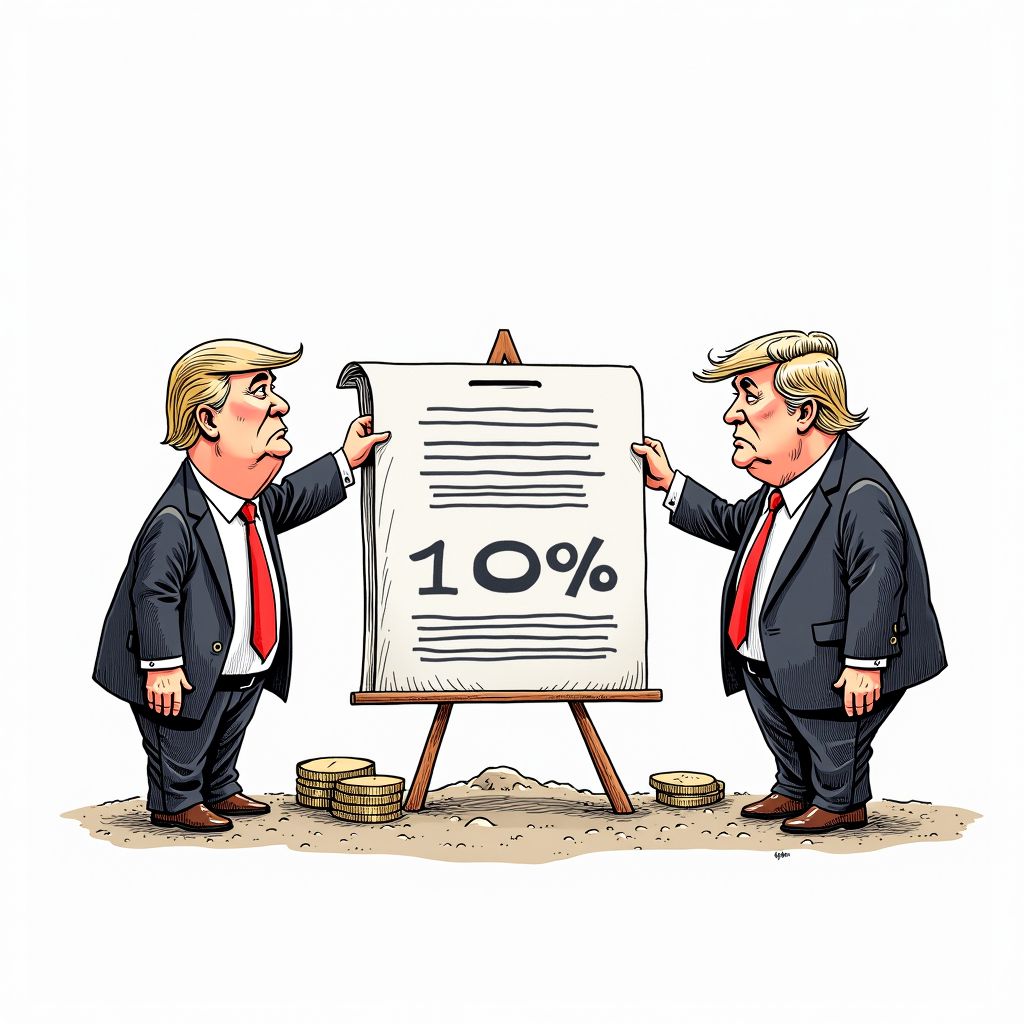
Hours after the Supreme Court struck down his trade policy, Trump invoked Section 122 to reimpose a 10% global tariff, layering new costs atop existing national security duties.
A Rapid Strategic Pivot
The reprieve for global supply chains proved remarkably short-lived. Just hours after the Supreme Court handed down a decisive 6-3 ruling invalidating the administration’s previous trade regime—a decision detailed in our earlier coverage [https://wsnext.com/4b691a1-Trade-Policy-Supreme-Court/]—President Trump has moved to immediately reinstate a 10% global tariff [1]. While the Court’s Friday morning decision stripped the executive branch of the authority to use the International Emergency Economic Powers Act (IEEPA) for broad tariff imposition [1][8], the White House has countered by invoking a completely different statute: Section 122 of the Trade Act of 1974 [1]. This rapid pivot demonstrates that while the legal justification has shifted, the administration’s economic objective remains firmly in place.
Technical Shift: From IEEPA to Section 122
This new executive order relies on a mechanism designed for balance-of-payments emergencies rather than national security. Under Section 122, the President holds the authority to impose import surcharges of up to 15% for a maximum duration of 150 days [1]. This statutory time limit is critical; it functions as a temporary bridge rather than a permanent solution. To secure these duties for the long term, President Trump announced that his team will simultaneously commence new investigations under Section 301 of the Trade Act [1]. This parallel track is part of a contingency plan the administration has been refining for months, anticipating that the Supreme Court might strike down their original IEEPA-based approach [1].
Compounding Costs for Importers
For businesses attempting to navigate this volatility, the landscape has become increasingly complex. The President specified that this new 10% levy will be applied “over and above” existing duties, rather than replacing them [1]. It is essential to distinguish between the specific legal authorities at play: the Supreme Court’s ruling on Friday specifically targeted the global tariffs rooted in IEEPA [2][3]. It did not invalidate the separate tariffs on steel and aluminum imposed under Section 232, nor did it affect existing tariffs on goods from specific nations like China under Section 301 [3]. Consequently, importers are not returning to a baseline of zero; they are facing a new surcharge layered atop these surviving trade barriers.
The Refund Reality
The economic implications of this “whack-a-mole” policy are profound. On one hand, the Supreme Court’s rejection of the IEEPA usage opens the door for the government to potentially refund over $175 billion collected from American importers since 2025 [3]. Legal experts anticipate an “administrative nightmare” as manufacturers and retailers file suit to reclaim these funds [3]. On the other hand, the immediate imposition of the Section 122 tariffs means that the cash flow burden on these same companies will not ease. While markets initially rose modestly on news of the Court’s decision [2], the swift reimposition of duties introduces a fresh wave of uncertainty into the global market.
Sources
- www.wsj.com
- www.bbc.com
- www.canadianlawyermag.com
- www.aljazeera.com
- www.youtube.com
- www.theguardian.com
- www.youtube.com
- www.bloomberg.com