US Economic Growth Slows Sharply to 1.4% Rate as Inflation Pressures Persist
Washington, Friday, 20 February 2026.
Fourth-quarter GDP expanded just 1.4%, significantly missing forecasts, while core inflation defied cooling trends to hold at 3%, creating a challenging policy landscape for the Federal Reserve.
A Double Blow to the Economic Outlook
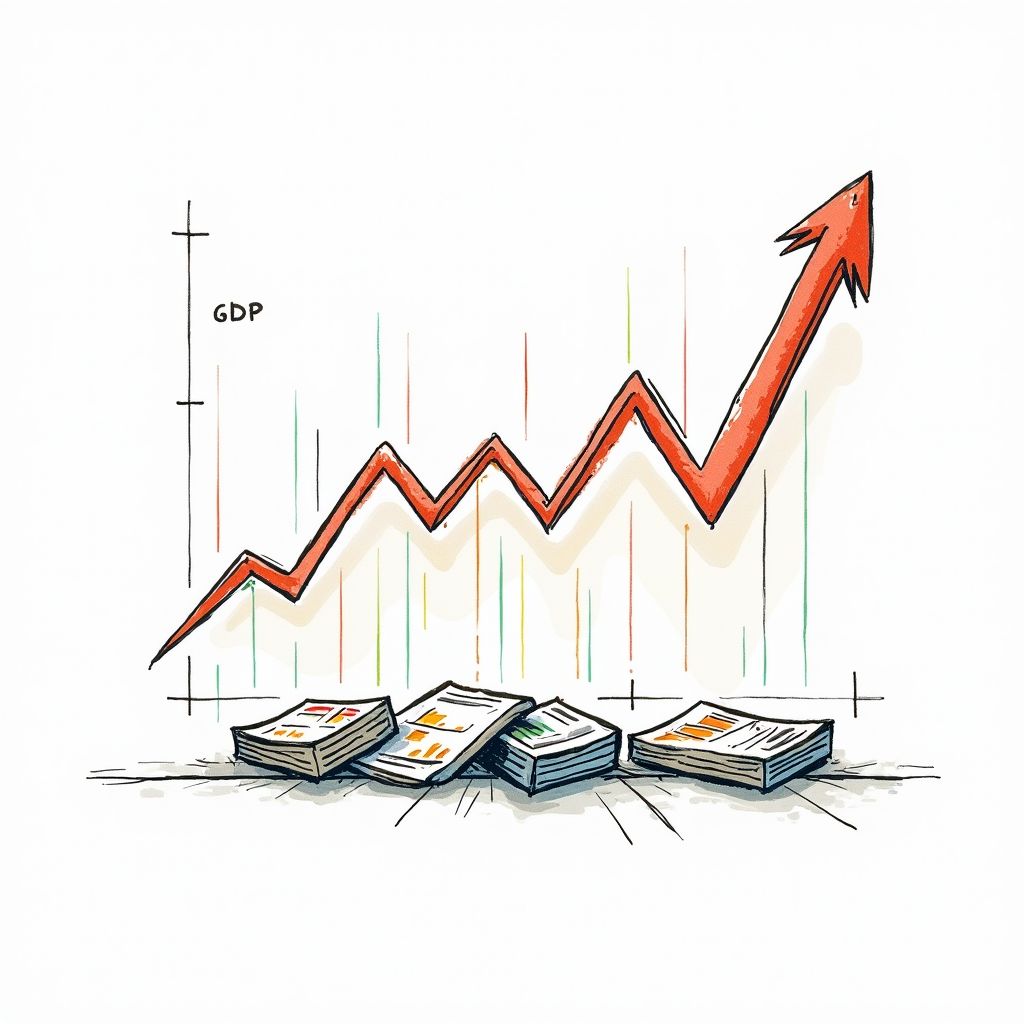
The latest data from the Bureau of Economic Analysis, released this Friday, paints a precarious picture for the American economy as it enters 2026. Fourth-quarter Gross Domestic Product (GDP) expanded at an annualized rate of just 1.4% [2][6][7], a figure that fell sharply short of the 2.5% growth projected by Dow Jones economists [2][3] and the 3.0% forecast anticipated by others [4][7]. This represents a 1.1 percentage point miss against the Dow Jones consensus, signaling a rapid deceleration from the robust 4.4% growth rate seen in the third quarter of 2025 [2][5][8]. While a slowdown was anticipated, the magnitude of the drop has rattled markets, particularly when paired with inflation data that refuses to cooperate with the Federal Reserve’s targets.
The Shutdown Effect and Consumer Fatigue
A significant portion of the fourth-quarter drag can be attributed to the 43-day government shutdown that spanned from October 1 to November 12, 2025 [2][7]. The Commerce Department and economists estimate this disruption subtracted approximately 1.0 percentage point from headline GDP growth [2][3][8], while the Congressional Budget Office (CBO) placed the impact even higher at 1.5 percentage points [4]. Federal government spending plummeted at a 16.6% annual rate during the quarter [2][3], with non-defense spending specifically plunging 24.1%, marking the steepest drop since 2020 [8]. While some of this lost output may be recovered in early 2026, the CBO has warned that between $7 billion and $14 billion in economic activity is permanently lost [4].
Political Fallout and Policy Dilemmas
The release has immediately become a political flashpoint. President Donald Trump took to Truth Social to blame the “Democrat Shutdown” for the lackluster performance, claiming it cost the country “at least two points in GDP” and renewing his attacks on Federal Reserve Chair Jerome Powell [2][3][7]. Despite the President’s call for lower interest rates [2][7], the economic reality facing the central bank is far less straightforward. With core inflation stuck at 3% [1][2] and showing “essentially no progress since mid-2024” according to some economists [4], the Fed faces a high bar for further rate cuts [1]. Minutes from the Fed’s January 2026 meeting even indicated that rate hikes could be back on the table if price pressures persist [8], leaving the central bank to navigate a narrow path between reigniting inflation and deepening the economic slowdown.
Sources
- www.investors.com
- www.cnbc.com
- www.cnbc.com
- www.reuters.com
- www.youtube.com
- www.bloomberg.com
- thehill.com
- financialpost.com