US and Iran Near Peace Agreement to Reopen the Strait of Hormuz and Stabilize Global Markets
Washington D.C., Sunday, 24 May 2026.
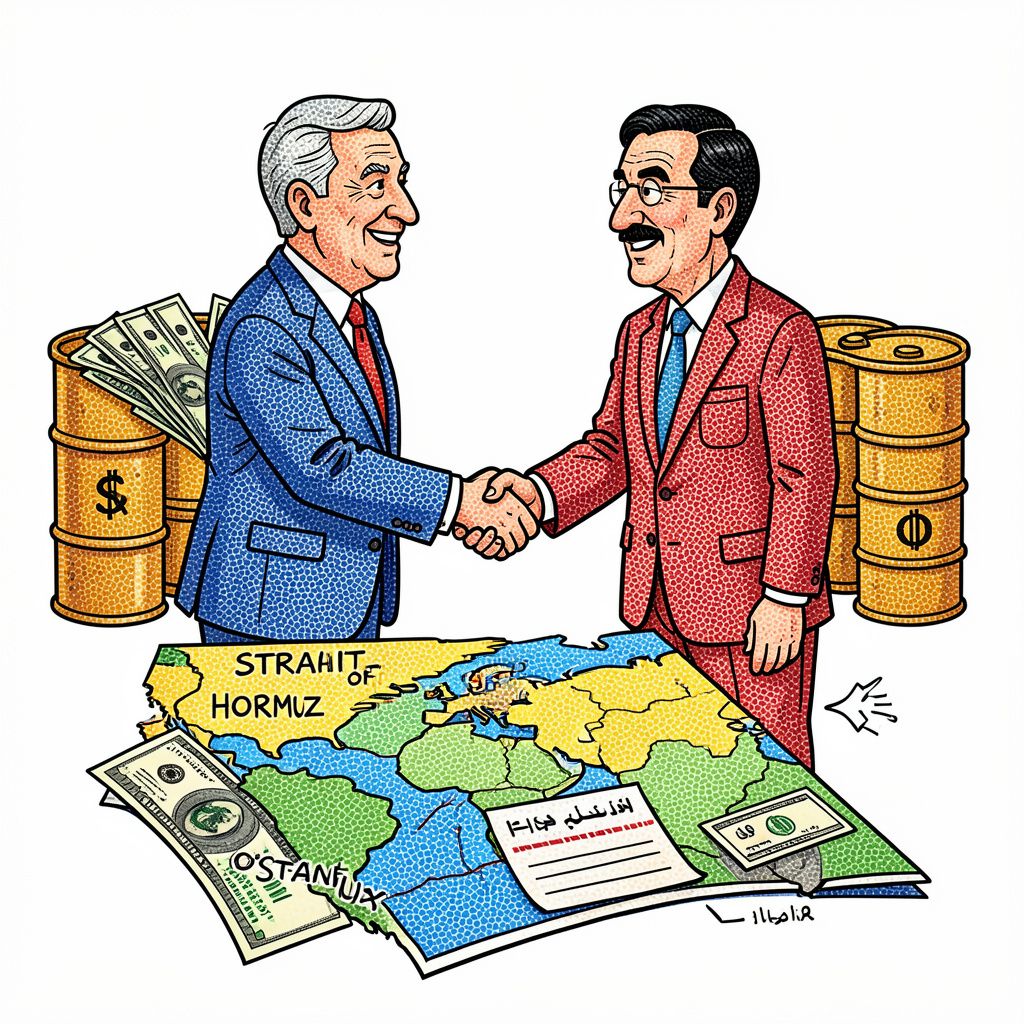
A near-final US-Iran peace agreement promises to reopen the Strait of Hormuz and potentially unfreeze $25 billion in assets, offering major relief to global energy markets and supply chains.
Economic Lifelines and the Strait of Hormuz
At the heart of the proposed agreement is the reopening of the Strait of Hormuz, a critical maritime chokepoint for global energy supply chains [GPT]. According to Iranian and U.S. officials, the memorandum stipulates that Tehran will reopen the strait to international shipping without imposing tolls, while Washington will simultaneously lift its naval blockade on Iranian ports [4][7]. The U.S. blockade, enforced since April 13, 2026, has severely squeezed Iran’s economy; U.S. Central Command reported redirecting 100 vessels and disabling four, while permitting only 26 humanitarian ships to pass, effectively halting commercial trade [3]. The total number of vessels intercepted or processed by Centcom during this period amounts to 130 ships [3].
The Nuclear Question and a Phased Diplomatic Approach
While the immediate focus is on maritime security and economic relief, the deeply contentious issue of Iran’s nuclear capabilities is being deferred to a subsequent phase of negotiations. Iranian Foreign Ministry spokesperson Esmail Baghaei confirmed that the initial 14-point framework does not resolve the nuclear question [2][3]. Instead, the memorandum establishes a 30 to 60-day window for detailed negotiations regarding Tehran’s atomic program [2][7]. U.S. Secretary of State Marco Rubio has emphasized that any final agreement must mandate the surrender of Iran’s highly enriched uranium and permanently bar the nation from acquiring a nuclear weapon [3].
Domestic Pushback and Lingering Uncertainties
Despite the optimism emanating from the White House—which saw President Trump skip his son Donald Trump Jr.’s wedding this weekend to finalize the terms—the proposed deal faces fierce opposition from Republican lawmakers [3][4]. Senator Lindsey Graham warned that the agreement could shift the regional balance of power, putting Hezbollah and Shia militias in Iraq “on steroids” [8]. Similarly, Senator Roger Wicker condemned the rumored 60-day ceasefire as a “disaster,” arguing it would render the achievements of the recent U.S. military campaign, dubbed Operation Epic Fury, entirely meaningless [8]. Former Secretary of State Mike Pompeo also criticized the framework on social media, labeling it “Not remotely America First” [4].