Euro Area Inflation Rises to 2.2% in November 2025
Brussels, Tuesday, 2 December 2025.
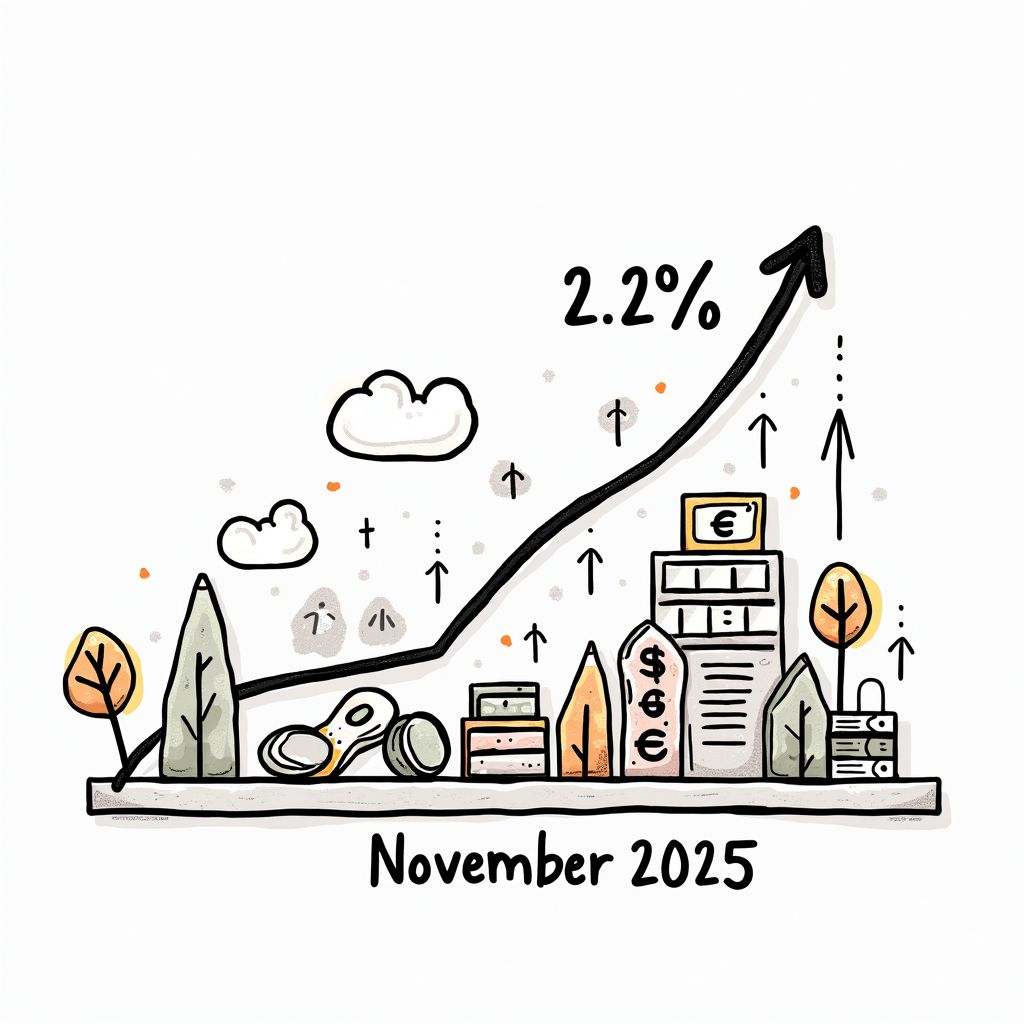
Euro area annual inflation increased to 2.2% in November 2025, driven by services at 3.5%, amid upcoming changes to the Harmonized Index of Consumer Prices.
Inflation Rate Overview
The euro area annual inflation increased to 2.2% in November 2025, up from 2.1% in October, according to a preliminary estimate by Eurostat, the statistical office of the European Union [1][2]. This slight rise, which is above market expectations of 2.1%, is primarily attributed to an increase in the services sector, which saw an inflation rate of 3.5% in November, up from 3.4% in October [2][3].
Sector Analysis
Within the euro area, the most significant contributor to the inflation rise is the services sector, which has reached its highest level since April 2025 [1][3]. The inflation rate for food, alcohol, and tobacco remained stable at 2.5%, while non-energy industrial goods also stayed unchanged at 0.6%. Energy prices, however, have shown a slight improvement, decreasing at a slower pace of -0.5% compared to -0.9% in October [1][3].
Upcoming HICP Changes
Significant methodological changes to the Harmonized Index of Consumer Prices (HICP) are expected to take effect on 4 February 2026. These changes will align the index with the new European Classification of Individual Consumption According to Purpose version 2, incorporating games of chance into the recreation services category [1]. This update aims to provide a more accurate reflection of consumer price trends and could influence economic strategies and policy decisions within the European Union [1][4].
Economic Implications
The rise in inflation to 2.2% holds significant implications for economic policy, particularly as it closely aligns with the European Central Bank’s target rate of 2% [3][5]. The ECB has maintained its key deposit rate at 2% since October, indicating a stable monetary policy environment. However, the slight uptick in inflation could prompt closer scrutiny of future financial strategies as the ECB continues to monitor economic indicators closely [5][6].